If you’ve lived in Florida for more than a season or two, you already know the drill: watch the tropics, stock the pantry, fill the gas cans. But there’s one part of hurricane prep that gets skipped more than it should, and that’s your electrical system. The National Oceanic and Atmospheric Administration (NOAA), the federal agency that tracks hurricanes and issues storm forecasts, is calling for a below-normal 2026 Atlantic hurricane season, with 8 to 14 named storms, 3 to 6 of which are expected to become hurricanes and 1 to 3 of those major hurricanes. Even a below-normal season is a reminder that a little electrical prep now can save you a lot of trouble later. At Palmer Electric, we’ve been helping Central Florida homes and businesses get storm-ready since 1951, so we’ve seen firsthand what separates a smooth outage from a dangerous one.
DOWNLOAD PDF: Hurricane Electrical Safety Guide for Florida Homeowners: Electrical Panels, Generators, Flooding and Power Outages
Key Takeaways: What to Do Before, During, and After The Hurricane
We know storm prep can feel like a lot at once. Before the step-by-step checklist, here’s the quick summary and why it matters:
- Hurricane electrical prep isn’t just about avoiding an outage; it’s about avoiding a shock, fire, or carbon monoxide hazard
- Florida’s building code already requires surge protection on newer home services, so if your panel is older, it’s worth checking
- Carbon monoxide from a generator can build up fast, even with a garage door cracked open, which is why sufficient distance from the house matters
- Not every storm issue needs a professional call, but a wet panel, a burning smell, or breakers that keep tripping always do
- Palmer Electric is available 24/7 if something doesn’t look or feel right before, during, or after the storm
Hurricane Electrical Safety Guide Overview
Keep this table close through storm season, on the fridge, saved on your phone, wherever you’ll actually see it when it counts.
| Phase | What To Do |
|---|---|
| Before | Locate and label your panel, charge devices, unplug sensitive electronics, secure outdoor equipment, test GFCI outlets, confirm generator and surge protection are ready |
| During | Stay away from standing water and wet panels, keep generators at least 20 feet from the home, never plug a generator into a wall outlet |
| After | Don’t touch flooded outlets or panels, watch for burning smells or buzzing sounds, call a licensed electrician before restoring power to affected circuits |
Why Electrical Safety Matters Before a Hurricane
Hurricane electrical safety matters because storms create risks beyond a simple power outage. Floodwater around outlets and panels, lightning-driven power surges, and storm-damaged wiring can all cause shock, fire, or equipment damage. Preparing your panel, generator, and surge protection ahead of time reduces those risks before the storm ever arrives.
Here’s what’s really at stake during a storm. Power outages are the most obvious risk, but they’re often not the most dangerous one. Floodwater around outlets, panels, or outdoor equipment can turn a routine restoration into a shock hazard. Power surges from lightning or grid fluctuations can fry appliances and electronics in an instant. And after the storm passes, exposed or damaged wiring left unchecked is one of the most common reasons Florida homeowners end up calling an emergency electrician.
Curious how a storm’s strength affects how long you might be without power? The National Hurricane Center’s Saffir-Simpson Hurricane Wind Scale, the standard used to categorize storm strength, offers a rough guide.
| Category | Sustained Winds | Potential Power Outage Impact |
|---|---|---|
| 1 | 74 to 95 mph | A few days to about a week |
| 2 | 96 to 110 mph | Several days to a couple of weeks |
| 3 | 111 to 129 mph | One to several weeks |
| 4 | 130 to 156 mph | Several weeks, sometimes longer |
| 5 | 157 mph or higher | Weeks, sometimes months |
These are general patterns, not guarantees, but they’re worth keeping in mind when you’re deciding how much backup power your home actually needs.
When Hurricane Milton hit Florida in October 2024, power outages peaked at about 3.4 million electric customers across the state, and some customers waited close to a week or longer for restoration. Storms like Milton are exactly why electrical prep deserves real attention, not just a quick mention on a checklist.
Flooding risk isn’t limited to hurricanes, either. In October 2025, a single non-tropical rain event dropped more than 17 inches of rain on Mount Dora in Lake County in one day, washing out roads and prompting a county-wide state of emergency. The same electrical safety rules apply no matter what caused the flooding: stay away from a wet panel, and don’t restore power to a flooded circuit without an inspection.

Prepare Your Electrical Panel Before the Storm
Your electrical panel is command central for your home’s power, so it’s the natural place to start your prep.
Do you know exactly where your panel is, and could you find it in the dark? If not, that’s step one. Walk through these basics before storm season ramps up:
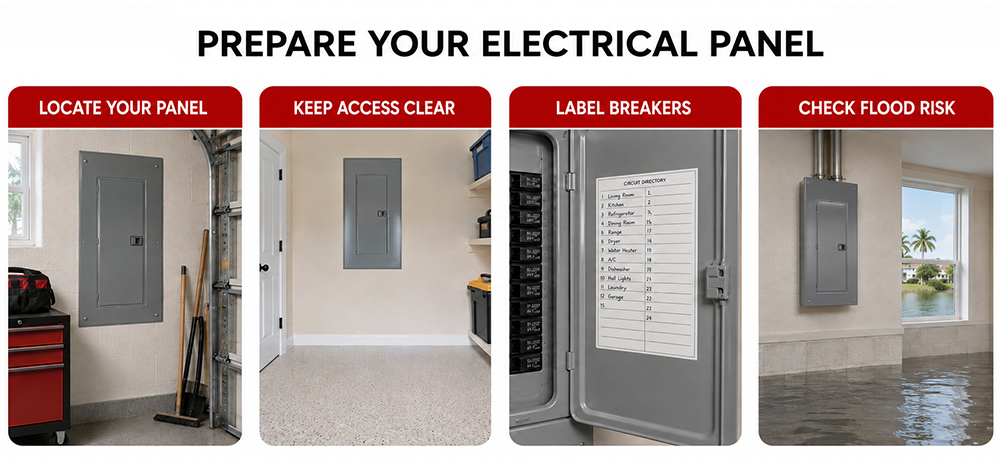
1. Locate your panel
Don’t wait until floodwater is rising to go looking for your panel for the first time.
- In Florida homes, the electrical panel is most often found in the garage, laundry room, utility room, hallway, or on an exterior wall near the meter.
- In condos and apartments, the panel that controls the unit is usually inside the living space, while the main service equipment is often located in a shared electrical room, meter room, or exterior meter bank.
- Older homes can be less predictable, so it is always smart to locate your panel before storm season, label the breakers, and make sure nothing is blocking access.
2. Ensure Access to the Panel
Make sure the area around it stays clear, with no storage boxes or furniture blocking access.
Per the National Electrical Code (NEC) Section 110.26(A), electrical panels need dedicated working space so they can be safely serviced while energized. The National Fire Protection Association (NFPA), which publishes the NEC, summarizes that space as at least 30 inches wide and 36 inches deep for typical residential panels. Section 110.26(B) goes a step further and requires that space to stay clear, not used for storage. That’s not just a code technicality. In an emergency, that clearance is what lets you, or your electrician, reach the panel safely and quickly.
3. Label your breakers
Label your breakers if they aren’t already, so you know at a glance which one controls your HVAC, kitchen, garage, pool equipment, and outdoor circuits
4. Does your panel have GFCI and AFCI breaker protection?
It is important to know whether your panel has GFCI and AFCI breaker protection because these devices protect against two very different electrical hazards.
- GFCI protection helps reduce shock risk, especially around water, damp areas, garages, outdoor circuits, and pool equipment.
- AFCI protection helps reduce fire risk by detecting dangerous arcing in damaged wiring, loose connections, or aging circuits.
In Florida, rain, lightning, humidity, and storm damage can make weak electrical points more dangerous. If your home is older, or if you are not sure what type of protection your breakers provide, it is worth having a licensed electrician check the panel.
If your panel does not have GFCI or AFCI breaker protection, do not panic, but do not ignore it either. A licensed electrician can identify which circuits need added protection, and confirm whether your panel can accept modern GFCI, AFCI, or dual-function breakers. In some homes, protection can be added at the breaker. In others, especially older homes, the safer answer may be a panel upgrade or targeted outlet-level protection.
At Palmer Electric, our certified electricians can check the panel, test the circuits, and recommend the safest code-compliant option for your home.
5. Do you live in a flooding risk area?
One more thing worth knowing if you’re near a lake, canal, or flood-prone area: homes in certain flood zones are required to have their electrical panel and service equipment elevated above the base flood elevation. If you’re not sure whether your home falls into that category, our certified electricians can take a look and let you know.
6. Do you live in a home built before 1980?
If your home was built before the mid-1980s, it’s worth checking your panel’s brand. Panels made by Federal Pacific Electric, known as Stab-Lok panels, and Zinsco panels have a documented history of breakers that fail to trip during an overload, which is exactly when you need them most. Many Florida insurance carriers flag these panels during underwriting, and a four-point inspection may call them out as an electrical concern. If you’re not sure what you have, our certified electricians can check the label inside your panel door in a few minutes.
Summary: Prepare Your Electrical Panel Before the Storm
| Prep Step | What to Check | Why It Matters |
|---|---|---|
| Locate your panel | Find it before storm season. Check the garage, laundry room, hallway, utility room, or outside near the meter. | You need to know where it is before an emergency. |
| Keep access clear | Keep at least 30 inches wide and 36 inches deep of clear working space. | Clear access helps you or an electrician reach it safely. |
| Label breakers | Label major circuits like HVAC, kitchen, garage, pool equipment, and outdoor circuits. | You can shut off the right circuit fast. |
| Check GFCI and AFCI protection | Look for GFCI, AFCI, or dual-function breakers. | These help reduce shock and fire risks. |
| Check flood risk | Know if your panel or service equipment may need elevation in a flood zone. | Floodwater and electrical equipment are a dangerous mix. |
| Check older panel brands | Look for Federal Pacific, Stab-Lok, Zinsco, or other outdated panels. | Some older panels may be unsafe or flagged by insurance. |
| Know when to shut off power | Only use the main breaker if the panel is dry, undamaged, and reachable without water. | Never touch a wet, damaged, smoking, or sparking panel. |
When to Turn Off Power Before Evacuating or Flooding
Turn off power at the main breaker only if it’s dry, undamaged, and you can reach it without standing in water. If floodwater has already reached the panel, or you notice moisture, smoke, sparks, or visible damage, don’t touch it. Contact your utility about shutting off power at the meter, and call a licensed electrician instead.
We know that decision can feel scary in the moment, especially if you’re rushing to evacuate. Here’s how to think through it, fast:
| Situation | What to Do |
|---|---|
| Panel is dry, undamaged, and reachable without stepping in water | Shut off the main breaker if you need to evacuate or prepare for flooding. |
| Panel has standing water, moisture, smoke, sparks, or visible damage | Do not touch it. Stay away and contact your utility about shutting off power at the meter. |
| You are not sure whether it is safe | Treat it as unsafe. Do not touch the panel. |
| You cannot safely reach the panel | Do not force it. Call your utility, then call a licensed electrician. |
In dangerous situations like this, being extra cautious is the right call. It costs you nothing, and it can be the difference between making a smart decision and stepping into a dangerous one.
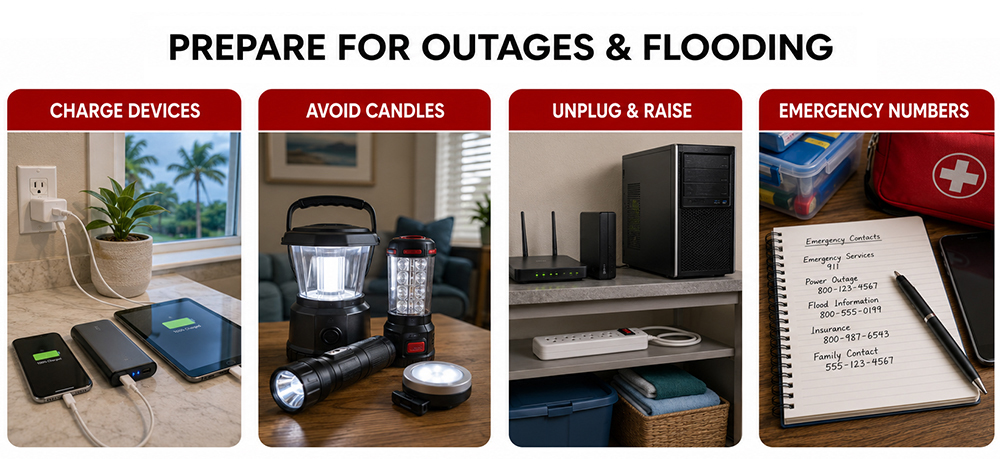
Prepare for Power Outages and Flooding
Losing power is stressful, but a little prep beforehand makes the outage itself far less chaotic.
Before severe weather arrives, walk through this list.
1. Charge everything early
Charge phones, tablets, battery packs, flashlights, radios, and medical devices before the storm arrives. Do not wait until the power starts flickering.
2. Keep battery-powered light handy
Place flashlights, glow sticks, or battery-powered lamps in easy-to-reach spots, like bedrooms, the kitchen, the garage, and near your electrical panel. Avoid relying on candles, kerosene lamps, or other flammable lighting materials, since they add fire risk during an already stressful situation.
3. Know what needs backup power
Make a list of the essentials you need to keep running. That may include a refrigerator, freezer, medical equipment, phone chargers, internet equipment, a few lights, or a window AC unit.
4. Move valuables and electronics off the floor
If your home is in a flood-prone area, move computers, chargers, power strips, tools, and small appliances off the floor before heavy rain arrives. Even a few inches of water can damage electrical equipment.
5. Take photos for insurance
Before the storm hits, take clear photos or videos of your electrical panel, meter, major appliances, electronics, outdoor equipment (AC unit, pool pump, or generator), and any valuable items. Save copies in cloud storage or send them to yourself by email so you can access them even if your phone is damaged. If you end up filing an insurance claim for storm damage, dated photos showing everything’s condition beforehand make the process faster, and give you real leverage if there’s ever a question about what broke and when.
6. Unplug sensitive electronics & appliances
Before the storm hits, unplug TVs, computers, routers, gaming systems, small appliances, and other sensitive electronics. This helps reduce the risk of damage from lightning, power surges, and sudden voltage spikes when the power flickers or comes back on.
7. Test sump pumps or drainage equipment
If your home has a sump pump or drainage-related electrical equipment, make sure it works before the storm. If it has battery backup, check the battery too.
8. Store generator fuel safely
If you use a portable generator, store fuel in approved containers, away from living areas, heat sources, and electrical equipment. Do this before the storm, not after gas stations are crowded or closed.
9. Make sure your generator connection is ready
If you plan to use a generator, make sure the transfer switch or approved interlock is already installed and working before storm season. Do not wait until an outage to figure out how to connect it safely.
10. Have emergency numbers ready
Save your electric utility’s outage reporting number, downed power line number, Palmer Electric’s contact information, your insurance company, and local emergency management contacts. Know how to report an outage or downed line to your utility ahead of time, because searching for that information during a storm is a headache you do not need.
Remember, utilities can’t guarantee power stays on, or that it comes back quickly, once a storm hits. Having a backup plan, whether that’s a generator, a place to stay with family, or just enough supplies to wait it out, takes a lot of the stress out of an outage.
Central Florida Utility Emergency Contact
| COMPANY | URL TO REPORT | EMERGENCY PHONE |
|---|---|---|
| FPL | fpl.com | 1-800-468-8243 |
| Duke Energy | duke-energy.com | 1-800-228-8485 |
| OUC | ouc.com | 407-423-9018 |
| Winter Park Utilities | cityofwinterpark.org | 877-794-2696 |
| Kissimmee Utility Authority | kua.com | 407-933-9898, Option 1 |
| Peace River Electric Cooperative | preco.coop | 800-282-3824 |
| Reedy Creek Improvement District | oversightdistrict.org | 407-824-4185 |
| SECO Energy | secoenergy.com | 352-793-3801 |
| Clay Electric Cooperative | clayelectric.com | 855-939-3840 |
| Leesburg Electric | leesburgflorida.gov | 1-833-223-1313 |
| City of Mount Dora Electric | mountdora.gov | 352-612-5739 for utility emergencies, 352-735-7151 for power outages |
Important: If Someone in the Home Uses Electric-Powered Medical Equipment
If anyone in your household depends on electric-powered medical equipment, a little extra planning goes a long way. Reach out to your electric utility before storm season even starts and ask about their medically essential or special needs programs. Many utilities prioritize restoration for these households, but you have to be registered ahead of time for that to help you. Beyond that, have a backup power option ready, and know your evacuation plan in case power doesn’t come back as quickly as you need it to.
Summary: Prepare for Power Outages and Flooding
| Prep Step | What to Do | Why It Matters |
|---|---|---|
| Charge devices early | Charge phones, battery packs, radios, flashlights, and medical devices. | You may not get another chance once power flickers. |
| Keep battery-powered Light ready | Place flashlights, glow sticks, or battery-powered lamps in bedrooms, kitchen, garage, and near the panel. | Safer than candles or kerosene lamps during an outage. |
| List backup power needs | Note essentials like fridge, freezer, medical devices, lights, and chargers. | Helps choose the right generator setup and prevent overload. |
| Move electronics up | Raise power strips, chargers, tools, computers, and small appliances. | Floodwater can damage equipment and create shock hazards. |
| Take insurance photos | Photograph the panel, meter, appliances, electronics, and outdoor equipment. | Helps document storm damage claims. |
| Unplug sensitive electronics | Unplug TVs, computers, routers, gaming systems, and small appliances. | Reduces surge and voltage-spike damage. |
| Test drainage equipment | Test sump pumps, drainage pumps, and backup batteries. | Helps reduce flooding risk. |
| Store generator fuel safely | Use approved containers away from heat, living areas, and electrical gear. | Reduces fire risk. |
| Check generator connection | Confirm the transfer switch or interlock is ready. | Prevents dangerous backfeeding. |
| Save emergency numbers | Save utility, downed-line, Palmer Electric, insurance, and emergency contacts. | Saves time during the storm. |
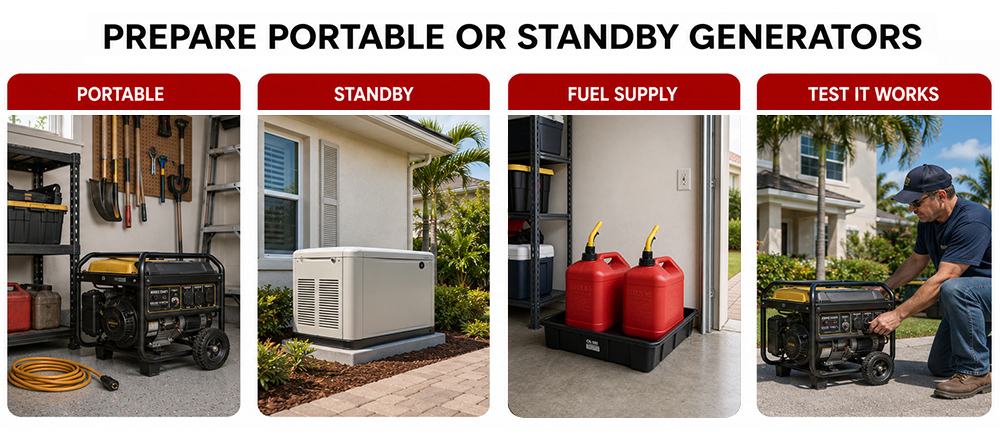
Pre-Storm Generator Maintenance Checklist
Before the storm hits, take a few minutes to get your generator ready. A generator can be a huge help during a Florida power outage, but only if it is tested, connected, fueled, and used safely. Whether you have a portable generator or a whole-home standby generator, the goal is the same: know what it can power, make sure it is ready to run, and avoid dangerous mistakes like carbon monoxide exposure, backfeeding, wet equipment, or overloaded circuits.
Portable Generator Prep Before the Storm
| Tip | What to Do |
|---|---|
| Run a test | Start the generator and let it run for about 15 minutes. Plug in a light or fan to confirm it is producing power. |
| Check fuel and oil | Store enough fuel for an extended outage, use fuel stabilizer if storing gasoline, and keep extra oil on hand. |
| Inspect cords and plugs | Use heavy-duty, outdoor-rated cords only. Check for frays, cracked insulation, damaged plugs, or loose connections. |
| Confirm safe connection | Make sure your transfer switch or approved interlock is installed and working. Never plug a generator into a wall outlet. |
| Plan for weather protection | Have a manufacturer-approved running cover ready so the generator can stay ventilated while reducing rain exposure. |
| Test CO alarms | Make sure carbon monoxide alarms work before the storm. Portable generators must stay outside and away from openings. |
| Pick a safe location | Choose a dry, stable outdoor spot at least 20 feet from the home, with exhaust pointed away from windows, doors, and vents. |
| Know your power needs | List essentials like the refrigerator, freezer, medical equipment, phone chargers, lights, internet equipment, or one small AC unit. |
| Keep supplies together | Store the owner’s manual, flashlight, gloves, cords, oil, fuel stabilizer, and basic tools in one easy-to-find place. |
| Service it early | Handle maintenance before storm season, not when a hurricane is already on the radar. |
Standby Generator Prep Before the Storm
| Tip | What to Do |
|---|---|
| Run a test | Confirm the generator completes its normal exercise cycle and check for warning lights or error codes. |
| Check fuel supply | Make sure natural gas or propane service is ready and that propane tanks are adequately filled. |
| Check battery condition | A weak battery can stop a standby generator from starting when you need it most. |
| Confirm transfer switch operation | Make sure the automatic transfer switch is working properly before storm season. |
| Clear space around the unit | Remove leaves, branches, mulch, patio furniture, and debris around the generator for airflow and service access. |
| Know your power needs | Confirm which circuits or loads the generator is designed to support, including HVAC, refrigerator, medical equipment, and lighting. |
| Watch for alerts | Check the controller for warning lights, maintenance reminders, or fault messages before severe weather arrives. |
| Keep records handy | Save the owner’s manual, warranty info, service records, and installer contact information where you can find them quickly. |
| Schedule service early | Have the generator inspected before hurricane season, especially if it has not been serviced recently. |
| Call if something looks off | If you see damage, corrosion, warning lights, or signs of flooding around the unit, have it checked before relying on it. |
Need help getting your home generator ready before the next storm? Palmer Electric is a certified Generac dealer, and offers generator maintenance and safety evaluations across Orlando and Central Florida.
Whole-Home Surge Protection and Lightning Risk
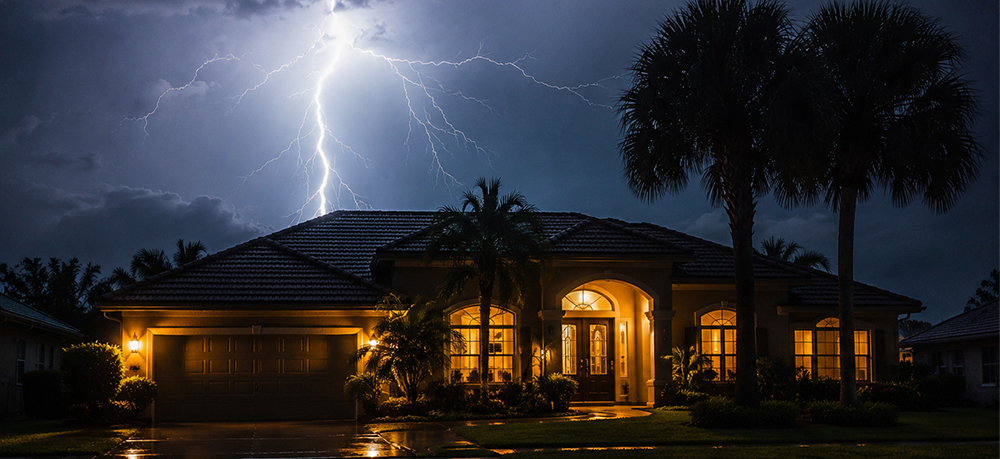
Whole-home surge protection is a device installed at your electrical panel that blocks damaging voltage spikes, whether from a lightning strike or a grid fluctuation, before they reach your outlets and appliances.
Whole-home surge protection needs to be handled before storm season, not after lightning damages a TV, router, appliance, or HVAC control board. The first step is simple: find out whether your home already has it, confirm it is working, and if it is missing, consider having it installed by a licensed electrician.
If You Already Have Whole-Home Surge Protection
| What to Do | Why It Matters |
|---|---|
| Have a licensed electrician confirm the device is working. | Surge protective devices can wear out after repeated surges. |
| Check for indicator lights or warning signals if your model has them. | Some units show when protection is reduced or no longer active. |
| Confirm it is properly matched to your panel and service. | The wrong setup may not give your home the protection you expect. |
If You Do Not Have Whole-Home Surge Protection
| What to Do | Why It Matters |
|---|---|
| Consider installing a Type 1 or Type 2 whole-home surge protective device. | It adds a first line of defense against voltage spikes. |
| Schedule installation before storm season gets busy. | Lightning season in Central Florida can bring sudden demand for electrical work. |
| Pair it with plug-in surge protectors for sensitive electronics. | Layered protection is best for TVs, routers, computers, and smart devices. |
If You Are Not Sure You Have Whole-Home Surge Protection
| What to Do | Why It Matters |
|---|---|
| Look near your electrical panel for a labeled surge protective device. | Some units are easy to miss if you do not know what they look like. |
| Check your panel paperwork or recent electrical work records. | Newer panel work may have included surge protection. |
| Ask a licensed electrician to verify it. | A quick inspection can confirm whether you have protection and whether it still works. |
If you have questions about whole-home surge protection and you live in Orlando or Central Florida, Palmer Electric has certified electricians inspect your panel, confirm your current protection, and install a whole-home surge protective device built for Florida’s lightning risk.
Pre-Storm Outdoor Electrical Components Inspection
Outdoor electrical equipment takes the brunt of Florida’s weather, so it deserves a closer look before hurricane season ramps up.
⚠️IMPORTANT: Keep the inspection visual. Do not touch damaged wiring, wet equipment, utility lines, or electrical components while standing in water. Contact a licensed electrician or your utility company if you notice a problem.
Walk your property and check these areas below.
1. Outdoor Outlets and Weatherproof Covers
Look for cracked or missing covers, covers that will not close fully, rust, corrosion, or signs that water has entered the outlet. Test the GFCI protection using the “test” and “reset” buttons, but only when the outlet is dry and appears undamaged.
2. Exterior Lighting Fixtures and Wiring
Check for loose fixtures, cracked housings, missing covers, or exposed wiring where the fixture connects to the wall. Make sure outdoor lights are securely mounted and rated for exterior use.
3. Pool Equipment Connections
Look for corrosion around pumps, timers, outlets, and electrical connections. Check whether the bonding wire appears loose or damaged, and confirm that the outlet powering the equipment has GFCI protection.
4. Garage Circuits and Exterior Panels or Disconnects
Check for rust, loose or missing covers, damaged conduit, and any sign that water has entered the equipment. Do not open an electrical panel or disconnect box yourself.
5. EV or Tesla Charger Connections
Inspect the EV or Tesla charger charging cable and connector for cracks, exposed wiring, or other damage. Make sure the charger is securely mounted. If flooding is possible, disconnect portable charging equipment and move it to a dry location before the storm, following the manufacturer’s instructions.
6. Electric Meter and Meter Base
Look for cracks, rust, loose mounting, or gaps where the meter base has pulled away from the wall. Do not touch the meter or attempt to make repairs yourself.
7. HVAC Disconnect and Wiring
Check the outdoor air-conditioning disconnect, conduit, and visible wiring for rust, loose covers, damage, or signs of water intrusion. These parts are usually located near the exterior HVAC unit.
8. Generator Connection
Inspect the generator inlet, transfer switch, plugs, and outdoor-rated cords for visible damage. Never connect a generator directly to a wall outlet or household wiring, since this can cause dangerous electrical backfeeding.
9. Solar Panels and Battery Equipment
Look for loose conduit, damaged enclosures, exposed wiring, debris, or signs of water around solar inverters and battery systems. Do not climb onto the roof or touch damaged solar equipment.
10. Your Weatherhead and Service Mast
The weatherhead is the curved fitting where the utility’s overhead power lines connect to your home. Look for anything bent, loose, disconnected, or worn. High winds can pull the service mast away from the house, and damage in this area is a serious electrical hazard.
Catching these issues while the weather is calm is much easier than dealing with them during or after a storm.
Pre-Storm Outdoor Electrical Components Inspection Summary
| Component | What to Check |
|---|---|
| Outdoor outlets | Cracked covers, corrosion, water damage, and working GFCI protection |
| Exterior lighting | Loose fixtures, cracked housings, or exposed wiring |
| Pool equipment | Corroded connections, loose bonding wires, and GFCI protection |
| Garage circuits and panels | Rust, missing covers, loose parts, or signs of water |
| EV charger | Damaged cables, exposed wiring, loose mounting, or flood exposure |
| Electric meter and meter base | Cracks, rust, loose mounting, or separation from the wall |
| HVAC disconnect and wiring | Rust, damaged conduit, loose covers, or exposed wires |
| Generator connection | Damage to the inlet, transfer switch, plugs, and outdoor-rated cords |
| Solar or battery equipment | Loose conduit, damaged enclosures, debris, or visible water exposure |
| Weatherhead and service mast | Bent, loose, disconnected, or damaged parts where power enters the home |
⚠️IMPORTANT: Keep the inspection visual. Do not open electrical panels, climb near overhead wires, or touch equipment that is wet. Contact a licensed electrician or the utility company if you notice damage.
DOWNLOAD PDF: Hurricane Electrical Safety Guide for Florida Homeowners: Electrical Panels, Generators, Flooding and Power Outages
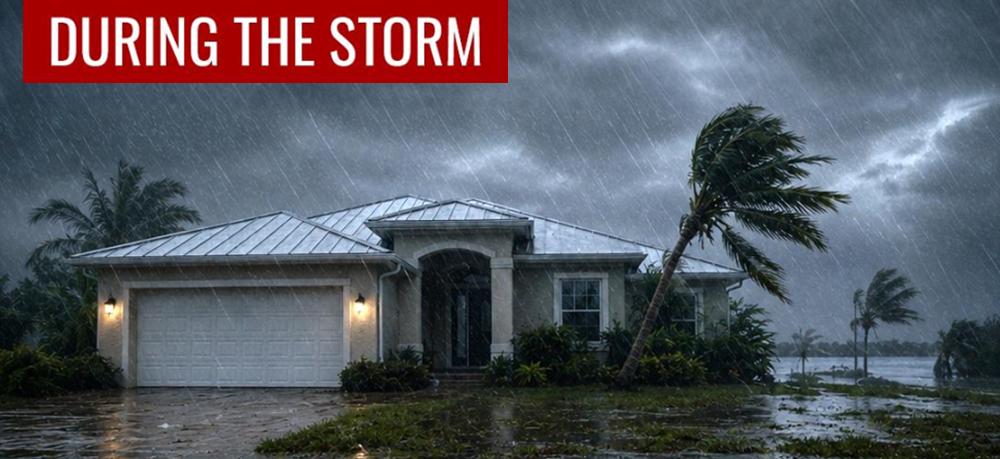
What to Do Electrically During the Storm
During the storm:
- Stay indoors and away from windows, doors, and porches.
- Avoid corded phones, plugged-in electronics, and plumbing like sinks or showers, since lightning can travel through both wiring and pipes.
- Don’t go outside to check your panel, meter, or generator, and don’t attempt any repairs until the storm has completely passed.
This isn’t overly cautious advice. The National Weather Service (NWS) warns that lightning can travel into a home through electrical wiring or plumbing wherever a bolt strikes nearby, which is why corded electronics and running water carry more risk than people expect during a storm. Cordless phones and cell phones are safe to use. Florida knows this risk better than most of the country. According to the National Oceanic and Atmospheric Administration (NOAA), the stretch of peninsula from Tampa Bay to Titusville, which includes the Orlando area, sees the highest lightning concentration in the United States.
If you already shut off power at the main breaker before the storm, leave it off until conditions are safe and you have confirmed there is no damage.
If your power is still on, stay away from any outlets, switches, or panels near a leak, and treat GFCIs as a helpful layer of protection, not a reason to take chances near water.
What to Do With Your Generator During the Storm
Portable generators are helpful after an outage, but they are not something to mess with during dangerous weather. If lightning, heavy rain, high winds, or flooding are still active, wait. The generator can help later, but only when it is safe to be outside, keep the unit dry, and place it away from your home.
Portable Generator Use During the Storm
| Tip | What to Do |
|---|---|
| Do not run it during severe weather | Do not run a portable generator during the worst part of a hurricane or thunderstorm. |
| Wait for safe conditions | Do not go outside to start, move, refuel, or connect a generator during active lightning, heavy rain, high winds, or flooding. |
| Never run it indoors | Do not run a portable generator inside your home, garage, porch, carport, shed, or any partly enclosed space. |
| Keep it away from water | Do not place the generator near standing water or where floodwater can reach it. |
| Avoid wet contact | Do not touch the generator if your hands are wet or you are standing in water. |
| Do not backfeed | Never plug the generator into a wall outlet. Use a transfer switch, approved interlock, or outdoor-rated cords. |
| Use only essentials | Run only what you truly need so you do not overload the generator. |
| Shut it down if unsafe | Turn it off if you smell fuel, see sparks, hear unusual sounds, or notice water near the unit. |
Standby Generator Use During the Storm
| TIP | WHAT TO DO |
|---|---|
| Let it run automatically | If the system is properly installed and maintained, let it start and transfer power on its own. |
| Do not inspect during dangerous weather | Do not go outside during lightning, flooding, or high winds to check the unit. |
| Watch from a safe place | If you can see the unit safely from indoors, look for obvious issues like debris, flooding, smoke, or unusual noise. |
| Do not reset a fault in unsafe conditions | If the generator from a safe place |
| Keep doors and windows closed nearby | Do not open windows, doors, or garage openings near the generator exhaust. |
| Reduce unnecessary loads | Turn off nonessential circuits or appliances if the generator seems overloaded. |
| Stay away if flooding occurs | If floodwater reaches the generator, transfer switch, meter, or panel, do not touch anything. |
| Call for help when safe | If you notice damage, smoke, sparks, fuel smell, or flood exposure, contact a licensed electrician or generator technician once conditions are safe. |
What Not to Do or Touch After a Storm
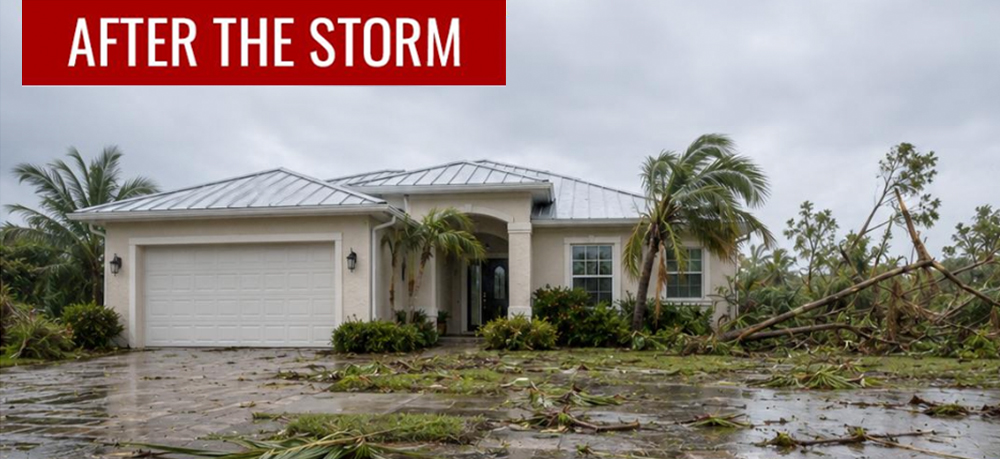
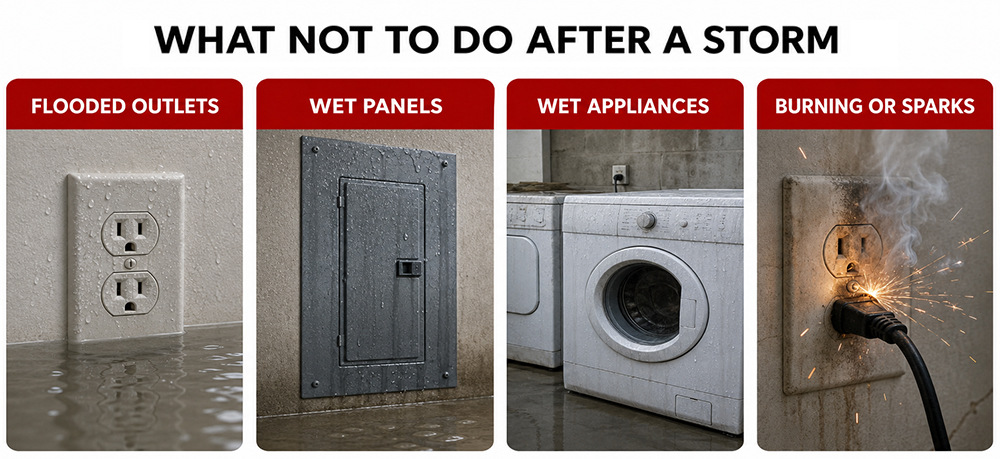
After a storm, don’t touch flooded outlets, wet panels, damaged meter boxes, exterior wiring, or downed power lines. Always assume a downed line is energized and stay at least 35 feet away. If you smell burning, hear buzzing, or see sparks anywhere in your home, stay clear and call a licensed electrician before that circuit gets used again.
We know it’s tempting to start cleaning up or checking on things the moment it’s safe to go outside. Take a breath first. A few areas need extra caution, indoors and out.
Inside your home:
- Flooded outlets, switches, or appliances: water conducts electricity, so a flooded outlet can still shock you even after the storm has fully passed
- Circuits that keep tripping when you reset them: a breaker that won’t stay on is telling you something’s wrong, often water intrusion or damaged wiring, and forcing it back on risks a shock or a fire
Outside your home:
- Downed power lines, and anything they’re touching, like a fence, a puddle, or a fallen tree limb: the line itself may still be energized, and the ground and any standing water around it can carry a charge too
- Damaged meter boxes or exterior panels: these sit exposed to the weather, so storm damage can leave live components exposed with nothing protecting you from contact
- Pool equipment that’s been underwater: a submerged pump or motor can leak current into the surrounding water, which is a serious risk if anyone gets in the pool before it’s inspected
The Electrical Safety Foundation International (ESFI), a nonprofit focused on electrical safety education, recommends staying at least 35 feet from any downed line, since the ground around it can carry a charge too. You don’t need to be touching the wire itself to be at risk.
After the Storm Electrical Safety Checklist
Once the storm passes, walk through this checklist before you use any part of your electrical system.
1. Exterior Safety and Inspection
- Stay away from downed lines: treat any downed or sagging power line as energized and dangerous; don’t go near it even to clear debris, and contact your utility immediately to report it.
- Inspect the weatherhead and service mast, where utility lines connect to your home: look for anything bent, pulled away from the house, or leaning.
- Check the meter base: make sure the cover over your electric meter isn’t cracked, loose, or hanging.
2. Interior Warning Signs
- Smell test: walk near your panel and outlets; a burnt plastic or fishy odor can mean wires are overheating or melting.
- Sound test: listen for sizzling, popping, or buzzing near outlets, switches, or the panel.
- Check the breaker box: if your neighbors have power but you don’t, the problem is likely on your side. Turn off every breaker, then reset the main breaker, often located outside near your meter, and turn each breaker back on one at a time. If any breaker won’t stay on, leave it off and call an electrician instead of forcing it or trying repeatedly.
3. Water Exposure and Damage
- Never step into a flooded room if outlets, appliances, or cords are underwater; that’s a serious shock risk.
- If your home was flooded, don’t go back inside until power is confirmed off, either because you safely reached a dry, undamaged panel yourself or because your utility or an electrician cut it for you.
- Skip any water-damaged electronics or appliances until a licensed electrician has inspected them.
You don’t have to figure out on your own whether something’s safe. If anything on this list gives you pause, that’s reason enough to call someone out to take a look before you flip a single switch.
Safety Tips for Generator Usage After the Storm
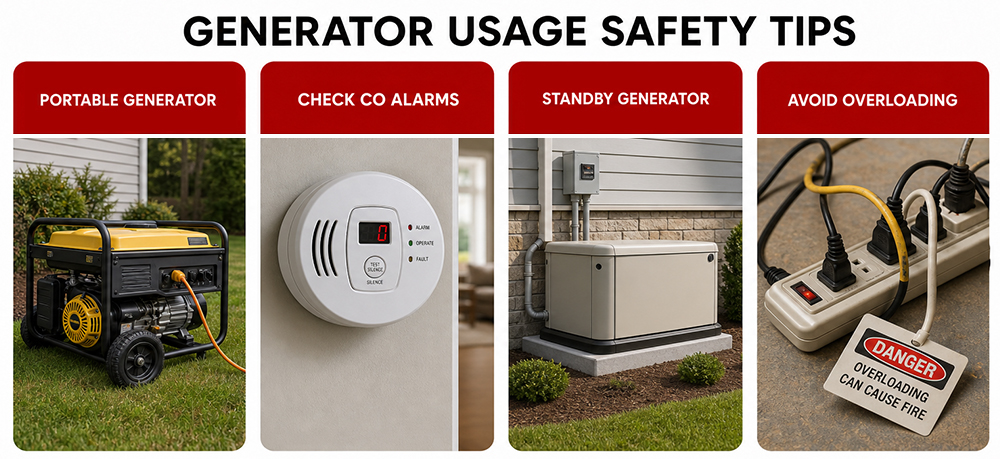
After the storm passes, generator safety matters more than ever. This is when many people start refueling, reconnecting loads, clearing debris, or checking equipment, and that is where mistakes can happen fast. Whether you use a portable generator or a standby generator, slow down, keep the equipment dry, watch for flood damage, and do not use anything that looks unsafe.
Portable Generator Safety After the Storm
| Tip | What to Do |
|---|---|
| Location | Place the generator outside, at least 20 feet from the home. Point exhaust away from windows, doors, vents, soffits, and garage openings. |
| Weather protection | Keep it dry and on a stable surface. Use a manufacturer-approved running cover if rain protection is needed. |
| Avoid overloading | Start with essentials and add loads slowly. Turn off or unplug loads before starting or stopping the generator. |
| Connect it safely | Use outdoor-rated cords, a transfer switch, or an approved interlock. Never plug it into a wall outlet. |
| Handle fuel safely | Store gasoline in approved safety cans, away from living areas, heat sources, electrical equipment, and fuel-burning appliances. |
| Refuel the right way | Turn off the generator and let the engine cool for at least 20 minutes before adding fuel. |
| Keep people safe | Keep children and pets away from the generator while it is running. |
| Check CO alarms | Keep checking carbon monoxide alarms, especially near sleeping areas. |
| Do not use damaged equipment | Do not use the generator if it got wet, flooded, damaged, or smells like fuel. |
| Stop when power returns | Stop using the generator once utility power is safely restored. |
| Call after flooding | If your home flooded, have a licensed electrician inspect affected wiring, outlets, panels, and generator connections before using backup power again. |
Standby Generator Safety After the Storm
| Tip | What to Do |
|---|---|
| Check the area safely | Once weather conditions are safe, look for debris, flooding, damage, smoke, fuel smell, or warning lights around the unit. |
| Keep airflow clear | Remove leaves, branches, mulch, patio furniture, or storm debris around the generator. |
| Watch for flooding | Do not touch the generator, transfer switch, meter, or panel if floodwater reached the equipment. |
| Avoid manual resets if damaged | Do not restart or reset the system if you see damage, water exposure, sparks, smoke, or error codes. |
| Manage power use | Turn off nonessential loads if the generator seems strained or if only selected circuits are backed up. |
| Keep exhaust clear | Keep windows, doors, vents, soffits, and garage openings closed near the generator exhaust path. |
| Check CO alarms | Keep checking carbon monoxide alarms, especially near sleeping areas. |
| Stop when power returns | Let the transfer switch return the home to utility power. Do not force the system manually unless instructed by a qualified technician. |
| Call after flooding | If your home flooded, have a licensed electrician inspect affected wiring, outlets, panels, transfer switch, and generator connections before relying on backup power again. |
| Schedule service if needed | If the unit ran for a long outage, was exposed to debris, or shows a warning light, schedule service before the next storm. |
What to do During Power Outages and Flooding
Quick reference: see the full sections above for details on each.
- Run portable generators outdoors only, at least 20 feet from your home, never inside a garage or enclosed space.
- Never plug a generator into a wall outlet; use a transfer switch or interlock kit instead.
- Don’t touch your panel if it’s wet, damaged, smoking, sparking, or surrounded by water; call your utility about shutting off power at the meter instead.
- Stay out of flooded rooms if outlets, appliances, or cords are underwater.
- Call a licensed electrician before turning power back on after any flooding.
- Keep refrigerator and freezer doors closed; a full freezer holds cold for about 48 hours unopened, a fridge for about 4.
How Long Will I Be Without Power?
How long you’re without power after a storm depends on the damage in your specific area and whether your home needs repairs before your utility can safely reconnect it. Minor storms often restore power within a day or two. Major hurricanes can leave outages lasting weeks. Checking your utility’s real-time outage map is the most accurate way to get updates for your address.
If you have no power after flooding, here’s the process:
- Contact your utility to find out why your power is out. If it’s specifically due to flood damage rather than a general outage, move to step 2.
- Check the restoration procedure for your county before you start. In some areas, like Osceola County, you may need to contact a licensed electrician who can pull a permit and inspect your property’s utility connection. In other areas, like Orange County, the first step is to contact your local government to schedule an inspection, then bring in a licensed electrician if repairs are needed.
- Once your county or city inspector clears your property, they notify your utility that power can safely be restored.
- Your utility restores power. Restoration time depends on the level of storm or hurricane damage. When damage is limited, customers may see power restored within 24 to 48 hours after the utility is notified. When damage is more severe, restoration can take several days, and in major events, sometimes a week or longer. Always check your utility company’s official updates for the latest restoration timeline. See the table below for Central Florida utility company websites’ real-time outage maps
IMPORTANT: Restoration steps vary by utility and county, so it’s worth knowing your specific process ahead of time, especially if your home has taken on floodwater.
Central Florida Utility Providers and Flood Damage Requirements
Here’s how each utility serving Palmer’s coverage area handles flood-damaged homes, along with where to check real-time outage status.
| Utility | Service Area | If Your Home Has Flood Damage | Real-Time Outage Map |
|---|---|---|---|
| Florida Power & Light (FPL) | Most of Central Florida, including parts of Orange, Brevard, Volusia, Seminole, Polk | Contact a licensed electrician for repairs and inspection; check with your local government for permit requirements before FPL restores service | fpl.com/outage |
| Duke Energy | Parts of Orange, Osceola, Lake, Polk, Seminole, Volusia | Duke Energy cannot reconnect until a licensed electrician inspects the system and your local building authority verifies repairs | outagemap.duke-energy.com |
| Orlando Utilities Commission (OUC) | Orange County and the City of Orlando | Contact your local government to schedule an inspection first, then hire a licensed electrician only if repairs are needed | outagemap.ouc.com |
| Kissimmee Utility Authority (KUA) | Osceola County | Contact a licensed electrician, who will pull a permit through Osceola County to inspect the connection before power is restored | kua.com/map |
| Winter Park Utilities | City of Winter Park | Winter Park requires a licensed electrician and permit sign-off for panel and service work generally. Contact Winter Park Electric Utility directly to confirm their specific flood-damage reconnection process. | cityofwinterpark.org/departments/electric-utility/ |
| Peace River Electric Cooperative | Parts of Polk and surrounding counties | Contact Peace River Electric Cooperative directly to confirm their flood-damage reconnection process; most Florida utilities require a licensed electrician’s inspection and local permit sign-off before restoring power to a damaged home. | https://www.preco.coop/outages-safety/outage-center/https://outages.preco.coop/ |
| Central Florida Tourism Oversight District (CFTOD) | Reedy Creek Energy Services | Contact Reedy Creek Energy Services directly to confirm their process; this utility serves Walt Disney World property specifically rather than general Central Florida residences. | https://www.oversightdistrict.org/utilities/ |
| SECO Energy | Parts of Lake and surrounding counties | SECO advises turning off your main breaker if it’s safe to reach, unplugging any wet appliances at their individual breakers, and contacting a licensed electrician to assess damage before power is restored. | https://stormcenter.secoenergy.com/ |
| Leesburg Electric | City of Leesburg (Lake County) | Leesburg Electric owns only the service wire and meter; the rest of your service riser is your responsibility to repair. Contact Leesburg Electric directly to confirm their inspection and reconnection process. | leesburgflorida.gov/services/electric/outages.php |
| City of Mount Dora Electric | City of Mount Dora (Lake County) | Contact Mount Dora Electric directly to confirm their flood-damage reconnection process; most Florida utilities require a licensed electrician’s inspection before restoring power to a damaged home. Note: only properties within Mount Dora city limits are served by this utility, if you’re just outside city limits, Duke Energy is likely your provider instead. | mtdora.encous.com |
| Lakeland Electric | Lakeland, Bartow, Auburndale, and surrounding Polk County | Lakeland Electric restores power once damage is repaired, but confirmed directly through Hurricane Milton coverage that homes with weatherhead damage or other resident-owned infrastructure damage must be repaired by a licensed electrician before power can be restored safely. | outagemap.lakelandelectric.com |
| New Smyrna Beach Utilities (NSBU) | Greater New Smyrna Beach, Volusia County | Contact NSBU directly to confirm their flood-damage reconnection process; most Florida utilities require a licensed electrician’s inspection before restoring power to a damaged home. | https://outages.nsbufl.com/ |
| Tampa Electric (TECO) | Parts of Polk County, including Bartow, Mulberry, and Polk City | TECO will not reconnect power until the electrical system is inspected by a licensed electrician, who must then obtain verification from the local building inspection authority before power can be restored. | tampaelectric.com/outage |
Once OUC notifies your local government that your home has passed inspection, OUC typically restores power within 24 to 48 hours. It also helps to know where responsibility splits: OUC maintains the service cable running from the utility pole to your weatherhead, but the weatherhead and meter base themselves are considered part of your home. Storm damage to either one is yours to repair before power can be reconnected.
If you’re outside these service areas, in Brevard, Lake, Polk, Seminole, or Volusia counties, check with your local utility directly, since the process can differ. Always follow the steps listed by your utility and local building department rather than assuming one process applies everywhere.
When to Call a Licensed Electrician After a Hurricane
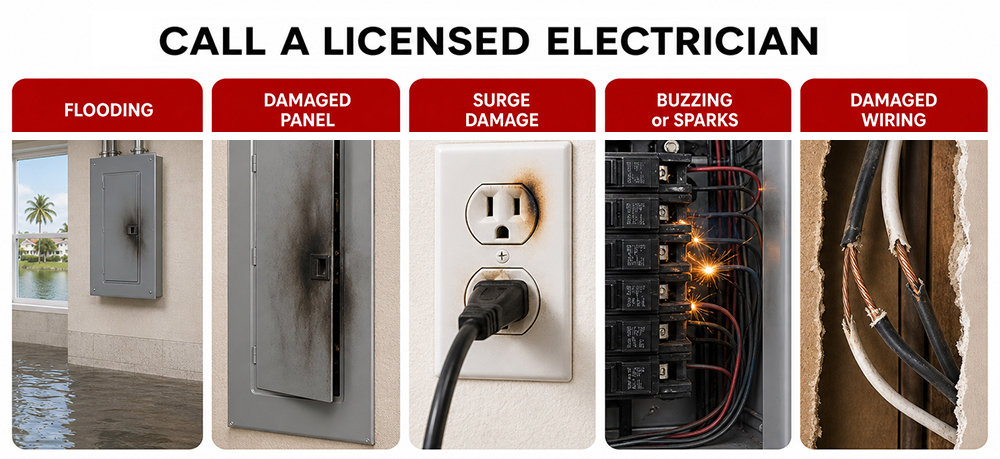
Call a licensed electrician if you notice flooded outlets or wiring, a water-damaged panel, breakers that keep tripping, flickering lights, burning smells, buzzing sounds, sparks, warm outlets or switches, damaged exterior wiring, or generator connection issues. When in doubt, it’s always worth the call.
Here’s the list of signs that indicate it’s time to bring in a professional electrician:
- Flooded outlets or wiring anywhere in the home
- A panel that shows signs of water damage or corrosion
- Breakers that trip repeatedly, even after resetting
- Lights that flicker once power is restored
- A burning smell, buzzing sound, or sparks near outlets, switches, or the panel
- Outlets or switches that feel warm to the touch
- Damaged or exposed exterior wiring
- Questions about connecting a generator safely
- Suspected surge damage to appliances or electronics
- Pool equipment that was submerged or exposed to floodwater
Hurricane Electrical Safety FAQs for Florida Homeowners
Still have questions about protecting your home’s electrical system before, during, or after a storm? Here are quick answers to what we hear most from Florida homeowners.
Should I turn off my main breaker before a hurricane?
Only if it’s dry, undamaged, and you can reach it without standing in water. If there’s flooding, moisture, smoke, sparks, or visible damage, don’t touch the panel. Contact your utility about shutting off power at the meter instead, and call a licensed electrician.
Is it safe to touch my electrical panel after flooding?
No. If your panel shows any sign of standing water, moisture, smoke, sparks, or visible damage, stay away from it entirely. Water conducts electricity, so a wet panel can still be dangerous after the storm passes. Call your utility or a licensed electrician before going near it.
Can I plug a generator into a wall outlet?
No. Plugging a generator into a wall outlet can cause backfeeding, sending electricity backward through your home’s wiring and onto the utility grid, which can injure or kill utility workers. A generator should only connect to your home through a transfer switch or approved interlock device installed by a licensed electrician.
How far should a portable generator be from my home?
At least 20 feet, according to the CPSC. Keep it away from windows, doors, vents, and garages, with the exhaust pointed away from your home. Never run a generator in a garage, carport, or other enclosed space, even with the door open.
Do I need a transfer switch for a generator?
Yes, if you want to connect a generator directly to your home’s wiring. A transfer switch or approved interlock device, installed by a licensed electrician, lets you power select circuits safely without the backfeeding risk that comes from plugging a generator into a wall outlet.
What electrical problems should I look for after a storm?
Watch for flooded outlets, a water-damaged panel, burning smells, buzzing sounds, sparks, breakers that keep tripping, flickering lights, and damaged exterior wiring. Any of these are reasons to call a licensed electrician before using that part of your electrical system again.
Who should I call for electrical storm damage in Orlando?
Call a licensed, local electrician like Palmer Electric for storm-related electrical damage, panel concerns, surge damage, generator connection issues, or unsafe circuits. Palmer Electric offers 24/7 emergency electrical service throughout Orlando and Central Florida.
Do I need to elevate my electrical panel if I live in a flood zone?
Possibly. Homes in certain flood zones are required to have their electrical panel and service equipment elevated above the base flood elevation. This mainly applies to new construction or major renovations. If you’re not sure whether your home qualifies, a licensed electrician can check your panel’s height against local flood zone requirements.
Should I unplug my EV charger before a hurricane?
Yes, you should unplug your EV charger, especially if flooding is possible. Treat it like any other major electronic: unplug it before the storm. Avoid using the charger afterward if it or the surrounding area was exposed to standing water, until a licensed electrician has inspected it.
Palmer Electric’s Hurricane Electrical Services & Service Area
When storm damage shows up, you want someone who already knows Florida’s homes, weather, and codes, not a call center reading from a script.
Palmer Electric provides 24/7 emergency electrical service for Orlando and Central Florida homeowners and businesses, including storm-related troubleshooting, safety inspections, panel repairs, surge protection, and generator-related electrical support. We work on both residential and commercial properties, so whether it’s your home or your business that took a hit, we can help.
We’ve served Central Florida since 1951, and we bring that same local knowledge to every storm call in Orange County and throughout Brevard, Lake, Osceola, Polk, Seminole, and Volusia counties.
When a storm knocks out power or damages your electrical system, Palmer Electric is available 24/7 across Orlando and Central Florida. Contact us by calling 407-646-8700 or filling out a contact form.
DOWNLOAD PDF: Hurricane Electrical Safety Guide for Florida Homeowners: Electrical Panels, Generators, Flooding and Power Outages
References
- Consumer Product Safety Commission (CPSC) |”What to Know About Generators and Carbon Monoxide.” https://www.cpsc.gov/s3fs-public/468-WhattoKnowGenerators_2022.pdf
- Electrical Safety Foundation International (ESFI) | “Downed Power Line Safety.” https://www.esfi.org/downed-power-line-safety-always-assume-downed-lines-are-live/
- Florida Building Commission | 9th Edition FBC workplan documentation. https://www.floridabuilding.org/fbc/commission/FBC_0825/Commission/2026_FBC_Workplan_August_2025.pdf
- Generac | Residential standby generator product line. https://www.generac.com/residential-products/standby-generators/
- National Electrical Code (NEC), NFPA 70 | Section 230.67, Surge Protection.https://www.electricallicenserenewal.com/Electrical-Continuing-Education-Courses/NEC-Content.php?sectionID=843
- National Electrical Code (NEC), NFPA 70 | Section 110.26, Spaces About Electrical Equipment. https://www.electricallicenserenewal.com/Electrical-Continuing-Education-Courses/NEC-Content.php?sectionID=3076
- National Hurricane Center (NHC) | Saffir-Simpson Hurricane Wind Scale. https://www.nhc.noaa.gov/aboutsshws.php
- National Oceanic and Atmospheric Administration (NOAA) | 2026 Atlantic Hurricane Season Outlook. https://www.noaa.gov/news-release/noaa-predicts-below-normal-2026-atlantic-hurricane-season