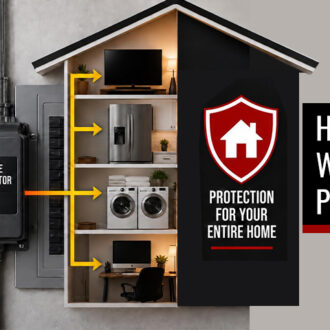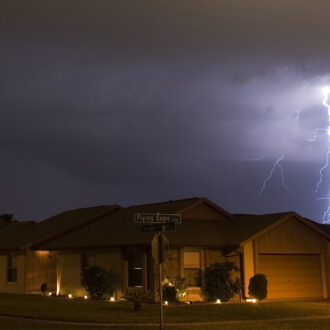
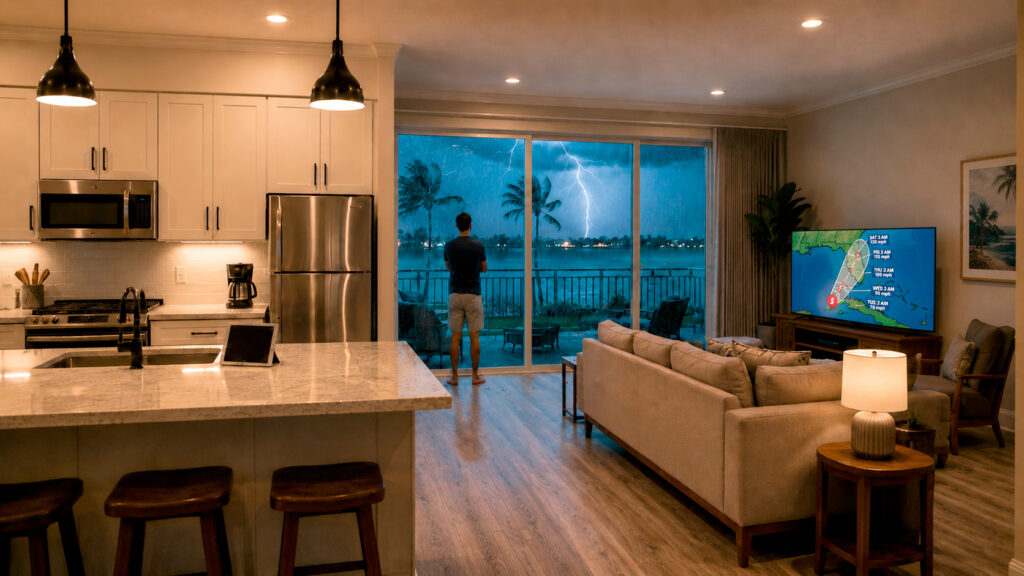
Yes, most Florida homeowners benefit from a whole-house surge protector. Florida’s frequent storms, humidity, and unstable grid conditions make homes more vulnerable to power surges than in other states. A whole-house unit protects your entire electrical system, not just what’s plugged into one outlet.
If you live in Florida, how are you protecting your house from lightning and power surges? At Palmer Electric, we’ve been helping Central Florida since 1951, so we’ve seen just about every way a power surge can damage a home’s electrical system, electronics, and appliances. In this article, you’ll find expert insights into the pros, cons, and key benefits of whole-house surge protectors, helping you decide whether whole-house surge protection services are right for your home.
Key Takeaways
- Florida consistently ranks among the top U.S. states for lightning density, which makes surge protection essential.
- Most power surges, up to 80% according to the National Electrical Manufacturers Association (NEMA), actually start inside your home, not from lightning. They often occur when large equipment, such as HVAC systems or refrigerators, cycles on and off.
- Utility grid switching and power restoration after an outage can also create damaging surges. Lightning gets most of the attention, but it is not the only surge risk homeowners need to think about.
- A whole-house surge protector does not replace point-of-use protection, such as plug-in power strips. Both work together for the best coverage.
Before we get into the details, here’s a quick snapshot of the numbers and facts that matter most.
Whole House Surge Protection in Florida: Overview
Why Florida Homes Face a Higher Risk of Power Surges
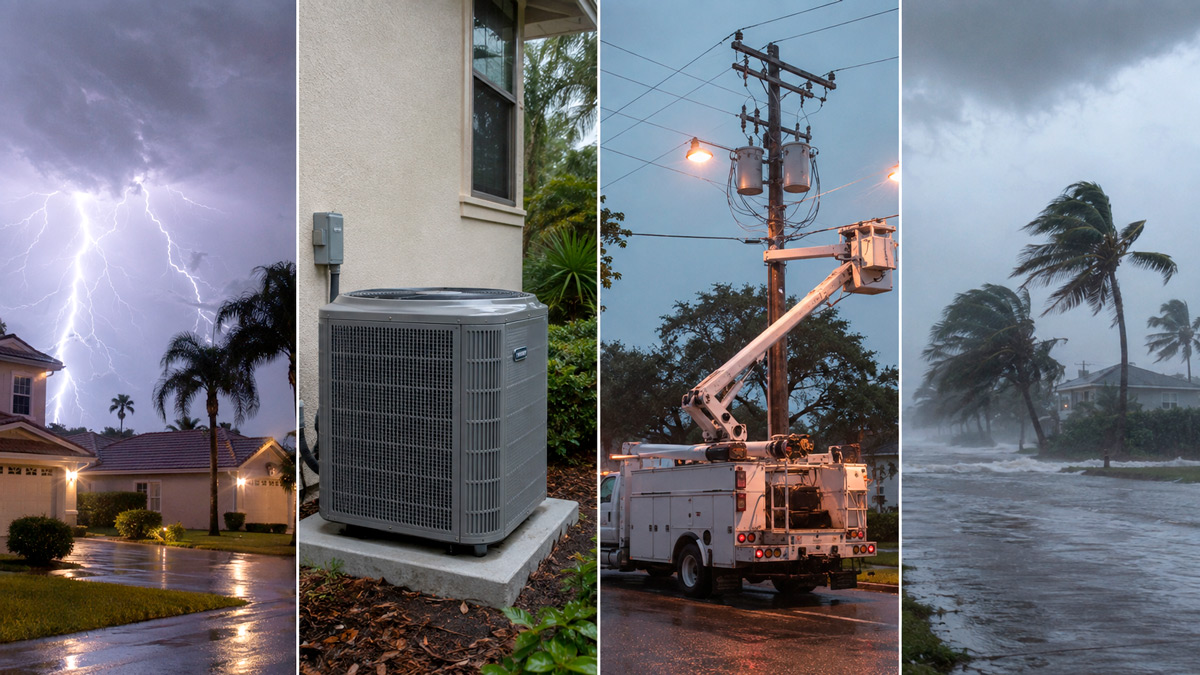
Florida’s weather and power grid create more surge opportunities than most states see in a year. Between lightning, storm-related grid switching, and heavy AC usage, Central Florida homes are exposed to surges on a near-constant basis during the warmer months.
1. Lighting
Let’s start with lightning, since that’s the one everyone thinks of first. Florida has a long history of lightning risk. National Weather Service data shows Florida recorded 498 lightning deaths from 1959 to 2017, more than any other state. More recent NWS annual fatality reports show that Florida recorded another 39 lightning deaths from 2018 through 2025, leading the country in most of those years, with 2019 and 2020 tied with Texas.
That’s not a coincidence. Central Florida sits right in the collision zone between the Atlantic sea breeze and the Gulf sea breeze, which fires up thunderstorms almost daily through the summer months. Add Atlantic hurricane season, which officially runs June 1 through November 30, and Central Florida spends roughly half the year under some level of elevated storm risk.
That matters for Central Florida homeowners because lightning is not just a rare storm-season concern here. Even when lightning does not strike your home directly, nearby strikes, utility issues, and power restoration after outages can create damaging voltage spikes. That is one reason whole-home surge protection is such a smart layer of defense in Florida homes.
2. Internal surges from large appliances and HVAC equipment
But here’s what a lot of homeowners don’t realize: a direct lightning strike isn’t even the most common cause of a power surge. Most surges are smaller and sneakier than that. The National Electrical Manufacturers Association (NEMA) estimates that 60% to 80% of surges actually come from inside the home, from your own AC compressor kicking on and off all day, every day, all summer long, or your pool pump cycling on its timer. In a state where the air conditioner practically never gets a break, that adds up to a lot of small electrical stress on your system, storm or no storm.
3. Severe thunderstorms
Central Florida thunderstorms bring lightning, high winds, heavy rain, and sudden power interruptions. Those conditions can all increase the chance of damaging voltage spikes.
4. Hurricanes and tropical weather
Hurricanes and tropical storms can damage utility lines, transformers, service equipment, and neighborhood power infrastructure. Surges can happen during the storm, but also when power is restored afterward.
5. Utility switching and power restoration
When the utility switches circuits, repairs damaged lines, or brings power back after an outage, you can sometimes get a quick voltage spike through your home’s electrical system. The tricky part is that these surges can happen even when there is no lightning in sight.
And here in Florida, we have another issue to deal with: humidity. Over time, moisture in the air can contribute to corrosion on electrical components, which puts even more stress on your system. At Palmer Electric, that is why we take surge protection seriously with our Central Florida customers. It is not just an extra add-on, it is another layer of protection for a home that already has a lot working against it.
What Can a Power Surge Damage in a Florida Home?
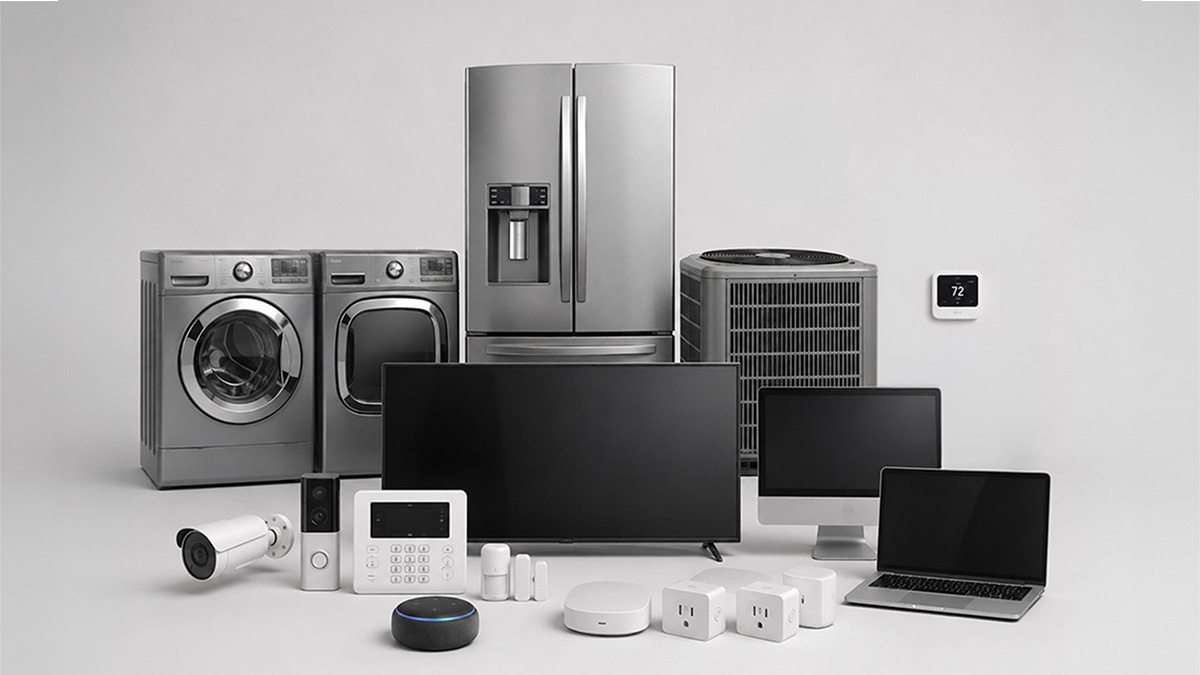
A power surge in a Florida home can instantly damage or gradually weaken many types of equipment that contain sensitive microchips, circuit boards, or electric motors. High-risk items include HVAC systems, smart appliances, home entertainment electronics, EV chargers, and outdoor pool or well equipment.
Surge damage usually happens in two ways:
- Instant damage: where a large spike from lightning or utility power issues can destroy components right away
- Hidden wear: where smaller everyday surges slowly break down sensitive electronics inside TVs, computers, washers, and other modern appliances.
Modern homes have way more at risk than homes did even ten years ago. Smart thermostats, security systems, EV chargers, and high-efficiency HVAC systems all run on sensitive circuit boards that don’t handle voltage spikes well. Below is a look at what’s commonly at risk in Florida homes.
Cost of Surge Damage in a Florida Home
The table below focuses on what homeowners often face after surge damage: component repair, control board replacement, or full equipment replacement. Some equipment can be repaired, but many damaged items are replaced when parts are unavailable, labor is high, or the unit is too old.
| EQUIPMENT AT RISK | TYPICAL COST IF DAMAGED | WHY IT’S VULNERABLE |
|---|---|---|
| AIR HANDLER OR HEAT PUMP | Control board or electrical repair: $150 to $900*Full HVAC replacement: often $5,000 to $15,000+* | • Control boards handle fan operation, cooling calls, heat pump functions, and safety controls• A surge can damage low-voltage controls or communication wiring |
| VARIABLE-SPEED, COMMUNICATING, OR MINI-SPLIT HVAC | Control, inverter, or board repair: $650 to $2,500+*Full replacement: often $5,500 to $18,000+* | • These systems rely on more sensitive electronics than many standard units• A surge can affect both indoor and outdoor unit electronics. |
| REFRIGERATOR | Repair or control board replacement: $180 to $500+*Full replacement: often $1,200+ installed* | • Modern refrigerators use electronic control boards for cooling, defrost cycles, sensors, ice makers, and temperature control• A surge can damage the control board or related electronics |
| SMART THERMOSTAT | Full replacement: $150 to $450* | • Circuit board tied directly into HVAC control wiring• A surge or low-voltage fault can damage the thermostat or affect HVAC communication |
| KITCHEN AND LAUNDRY APPLIANCES | Control board repair: $150 to $600+*Full appliance replacement: often $500 to $2,500+* | • Washers, dryers, ranges, ovens, microwaves, and dishwashers now rely on electronic boards• Controls manage cycles, sensors, heating elements, motors, and safety functions |
| SECURITY PANEL, CAMERAS, OR NVR SYSTEM | Component or system replacement: $200 to $1,500+* | • Security equipment often stays powered 24/7, so it is always exposed to grid fluctuations• Surge damage may interrupt alarms, recording, and remote access |
| GARAGE DOOR OPENER | Logic board repair: $150 to $400*Full replacement: often $400 to $900 installed* | • The logic board, safety sensors, and control wiring can be damaged by voltage spikes• Long wiring runs in garages can pick up surge energy during storms |
| POOL PUMP OR POOL EQUIPMENT | Control or drive repair: $300 to $700+*Full replacement: often $1,200 to $2,500+* | • Florida pool equipment sits outdoors in heat, rain, humidity, and lightning-prone weather• A surge can damage the drive, controller, timer, automation system, or motor controls |
| WELL PUMP | Control box repair: $200 to $800*Pump or control replacement: often $1,000 to $3,000+* | • Well systems use motors, relays, pressure switches, and control boxes• Outdoor wiring and lightning activity can increase surge exposure |
| IRRIGATION CONTROLLER | Controller replacement: $200 to $900* | • Irrigation controllers connect to outdoor valve wiring, which can carry surge energy during storms• Damage can affect zones, timers, transformers, or smart irrigation controls |
| EV CHARGER OR WALL CONNECTOR | Charger or wall connector replacement: $500 to $1,500+* | • Connected to high-power circuits and include sensitive electronics• A surge can damage charging controls, safety monitoring, or communication components |
| GENERATOR TRANSFER SWITCH OR CONTROLS | Control repair or switch replacement: $400 to $2,500+*Automatic transfer switch replacement: often $1,000 to $3,500+* | • Uses electronics to sense utility power, start the generator, and transfer loads• Surge damage can affect backup power reliability |
| SOLAR INVERTER OR MICROINVERTERS | Inverter or microinverter replacement: $800 to $3,000+* | • The inverter, not the panels themselves, is usually the most surge-sensitive part of a solar system• Surges can enter through utility, service equipment, or exterior solar wiring paths |
| SMART-HOME EQUIPMENT | Device or system replacement: $100 to $1,500+* | • Smart hubs, switches, locks, doorbells, cameras, and lighting controls use sensitive electronics.• A surge can knock out several connected devices at once. |
| TVS | TV replacement: $200 to $2,000+* | • Rely on circuit boards, power supplies, HDMI ports, and smart-TV electronics• Surges can enter through power, cable, antenna, or connected devices |
| COMPUTERS | Computer replacement: $600 to $2,500+* | • Computers contain sensitive power supplies, motherboards, storage drives, monitors, and network components.• A surge can damage the device itself or connected equipment like docks, monitors, printers, and external drives. |
*Costs are typical repair or replacement ranges for Florida homeowners when available, supplemented by national averages where Florida-specific pricing is limited. Actual costs vary by brand, part availability, warranty status, labor, emergency service timing, and whether the item is repaired or fully replaced. For an accurate estimate on your specific system, our certified electricians can take a look and give you a real number.
Notice a pattern here? It’s not just your AC or refrigerator anymore. Between solar, generators, pools, EV chargers, and security systems, the average Florida home now has more expensive electronics tied to one panel than it did even five years ago. Our certified electricians see this play out after almost every major storm season: it’s rarely one device that fails; it’s three or four at once, because a bigger surge event hits everything connected to your panel at the same time.
Do I Need a Whole House Surge Protector?
Yes, in most cases. If you have a modern HVAC system, smart home devices, or you’re anywhere in Florida’s storm season path, a whole-house surge protector is worth it, especially for homes with newer electronics, a pool, solar, or a panel that’s due for an upgrade anyway.
Not sure if you need a whole house surge protector? Here’s a quick check. If any of these describe your home, a whole-house surge protector is worth a serious look:
- You have a heat pump, air handler, or AC system with a variable-speed or communicating control board
- You’ve got smart thermostats, a security system, or networked cameras
- Your home has a pool pump, well pump, or other motor-driven equipment that cycles regularly
- You’ve had a service panel replaced or plan to replace one soon, since NEC Section 230.67 will require a surge protector as part of that work
- You’ve experienced repeated small appliance failures without an obvious cause
- Your home sits in an area with frequent storm activity or utility grid switching
If none of those sound like your situation, and your panel isn’t being touched anytime soon, surge protection is still worth discussing, just maybe not urgent. For most Florida households, though, at least one or two of these apply.
Is a Whole House Surge Protector Worth It?
Yes, whole-house surge protection is worth it for most homeowners, especially if your home has modern HVAC equipment, smart appliances, an EV charger, pool equipment, or expensive electronics. A whole-house surge protector is a smart investment because professional installation usually costs far less than replacing a single large appliance or central air conditioner fried by a major voltage spike.
Go back to the device cost table earlier in this article for a second. A single HVAC board replacement can already cost as much as an entire surge protector installation, and that’s before factoring in whatever else got hit in the same event. Since up to 80% of surges start inside the home from everyday appliance cycling, according to NEMA, this isn’t a once-in-a-decade storm risk, it’s an ongoing exposure your electrical system deals with year-round.
But the dollars-and-cents comparison is only part of the picture. Here’s what else factors into “worth it” for a homeowner:
Protect Your Equipment From Slow Surge Damage
Not every surge damages a device right away. A whole-home surge protector also helps reduce cumulative wear from small, repeated voltage spikes. This is a slow, invisible wear that can damage sensitive electronics over time.
Think about it. Small stress spikes on control boards, capacitors, contactors, and variable-speed drive electronics add up over time without causing one dramatic failure. You may never be able to trace a shortened equipment lifespan to surges, but that doesn’t mean it isn’t happening.
Protect Your Home Before Storm Season
Timing matters more than people think. In our experience at Palmer Electric, service calls tend to spike across Central Florida after a major storm rolls through. If your AC control board fails the week after a hurricane, for example, you’re not just paying for the repair; you’re waiting in line for it, often in the middle of a Florida summer with no air conditioning. Getting protection in place before storm season starts is a lot less stressful than dealing with a failure during it.
Surge Protection May Help With Insurance Costs
Some homeowners insurance providers offer premium discounts for homes with whole-house surge protection installed, since it lowers their risk of paying out an electrical damage claim. Discount availability and amount vary by insurer, so it’s worth a quick call to your provider to ask, but it’s a real factor that can offset part of the installation cost over time.
None of this requires a single major storm to justify the investment. Between the everyday internal surges, the cumulative wear, and the peace of mind of not being in a repair queue after the next big storm, most Central Florida homeowners find it pays for itself well before anything dramatic happens.
Pros and Cons of Whole House Surge Protector
Like any home electrical upgrade, whole-house surge protection has real strengths and real limits. Knowing both helps you make a decision you’ll actually feel good about.
| PROS | CONS |
|---|---|
| Helps protect circuits and equipment connected through the panel | Does not guarantee protection from a direct lightning strike to the home |
| One installation, no batteries, and no separate protector needed at every outlet | Does not cover surges entering through cable, phone, data, or antenna lines |
| Reduces the risk of multiple devices failing in a single event | Does not replace point-of-use protection (such as plug-in power strips) for your most sensitive electronics |
| Helps satisfy NEC Section 230.67 for new or replaced service equipment supplying dwelling units | The device itself has a lifespan and needs replacement after major surges |
| May reduce cumulative wear on HVAC and appliance electronics over time | Upfront cost, even if modest compared to repair costs |
| Diverts excess voltage to the home’s grounding system, which can help reduce overheating-related electrical stress, a contributing factor in the estimated 24,000 residential electrical fires reported in the U.S. each year, according to the U.S. Fire Administration | Does not replace proper grounding and bonding, which the surge protector relies on to work correctly |
A whole-house surge protector has a few limits, but the pros are strong for most Florida homes. It helps protect major equipment and adds a smart layer of defense against storms, utility surges, and everyday voltage spikes.
And if a storm does knock something out before you’ve had protection installed, that’s exactly the kind of situation our 24/7 emergency electrical service is built for. We’d rather you call us at 2 AM during a storm than wait until morning wondering if something’s actually wrong.
Benefits of a Whole-Home Surge Protector
Benefits of a whole-home surge protector include adding panel-level protection for circuits and equipment throughout the home, helping protect major appliances and hardwired equipment like pool pumps and EV chargers, reducing cumulative electrical stress, and lowering the risk of costly repairs and replacements.
Unlike a basic power strip, a whole-home surge protector adds protection at the panel level. It helps reduce damage from lightning-related surges, utility grid switching, power restoration after outages, and smaller everyday surges that start inside the home or building when equipment like air conditioners, refrigerators, or pool pumps cycles on and off. It can also help reduce slow, invisible wear on sensitive circuit boards over time.
Benefits Of Whole House Surge Protection Overview
| Benefit | Why It Matters |
|---|---|
| Protects the whole electrical system | Helps reduce surge damage across circuits connected through your main panel, not just one outlet. |
| Helps protect major appliances | Adds protection for HVAC equipment, refrigerators, washers, dryers, ovens, and other expensive equipment with control boards. |
| Protects hardwired equipment | Covers items that cannot plug into a power strip, like air handlers, pool pumps, EV chargers, and some security systems. |
| Reduces cumulative wear | Helps reduce slow, invisible electrical stress from small repeated voltage spikes over time. |
| Adds storm-season protection | Especially useful in Central Florida, where lightning, hurricanes, outages, and power restoration can create surge risks. |
| Supports NEC compliance | Helps meet NEC Section 230.67 requirements for new or replaced service equipment supplying dwelling units. |
| Works with point-of-use protection | Gives your home a first layer of defense, while plug-in surge protectors add extra protection for sensitive electronics. |
| May save money long-term | Professional installation often costs less than replacing one major appliance, HVAC control board, or damaged electronics after a surge. |
A whole-home surge protector is not a magic shield, but it is one of the smartest ways to reduce surprise repair costs and protect expensive equipment before the next surge happens.
Which Florida Homes Benefit Most From Whole-House Surge Protection?
The homes that benefit most combine two things: valuable, sensitive electronics and frequent surge exposure. In Florida, that pattern shows up across five common home profiles, from newer smart homes to older properties still running on an original panel, each one at risk for a different reason.
Not every Florida home has identical risk. Here’s how it tends to break down by home type:
Newer construction with smart home features
Newer homes often run more low-voltage, networked devices off the same panel than older homes ever did: smart thermostats, cameras, locks, and lighting systems all sharing circuits. That’s less about any single device being at risk and more about how many of them can go down together in one event.
Homes with solar panels or a home generator
Solar inverters and generator transfer switches are sophisticated, expensive electronics sitting right at your electrical service. At Palmer Electric, as a Generac dealer, we talk to a lot of homeowners who’ve invested in backup power and want that investment protected the same way they’d protect the rest of the house.
Homes with a pool or well pump
Modern pool and well pump systems often run on variable-speed motors with their own electronic control boards, not just a simple on/off switch like older models. That control board is exposed to frequent cycling activity, which makes it one of the more common failure points we see after a surge event.
Older homes with original or outdated panels
An older panel wasn’t designed around today’s surge exposure, and it likely doesn’t have any surge protection built in at all. If your home hasn’t had an electrical inspection in a while, this is often where we find the most risk hiding.
Homes with high-efficiency or variable-speed HVAC systems
These systems often run on proprietary, communicating control boards that aren’t sitting on every parts truck. If one fails, you may be waiting longer on a replacement part than you would with a standard AC system, and in a Florida summer, that wait is often what actually hurts, not just the repair bill.
Homes with security systems or continuous-power equipment
Unlike a pool pump or AC unit that cycles on and off, a security panel, NVR, or camera system stays powered around the clock. That constant connection means it’s exposed to grid fluctuations at all hours, not just when it happens to be running.
Homes with a dedicated home office
If a surge takes out your computer, monitor, or networking equipment, it’s not just a repair cost, it’s a day or more without the equipment you actually work from. That makes a home office worth factoring in separately from general electronics risk.
Homes with expensive appliances and electronics
Homes with high-end appliances, smart TVs, computers, home theaters, security systems, and smart home devices have more to lose from a power surge. Many of these devices rely on sensitive circuit boards, so even a small voltage spike can cause damage or shorten their lifespan over time.
EV charging equipment
Homes with Level 2 EV chargers benefit from whole-house surge protection because the charger is connected to a high-power circuit and contains sensitive electronics. A major surge can damage the wall connector, charging controls, communication components, or, in severe cases, the vehicle’s onboard charging system while the EV is plugged in.
When Should a Florida Homeowner Consider Installing Whole-House Surge Protection?
The best time to install is before you need it, ideally during a panel replacement, new construction, or before hurricane season. That said, certain warning signs mean it’s worth acting sooner rather than later.
A few common moments when Florida homeowners typically look into surge protection:
During panel replacement
Since NEC Section 230.67 already requires a surge protector as part of most panel replacements, adding it at that point usually means less incremental labor cost than installing it as a separate, standalone job later.
New construction or major renovation
It’s far easier and more cost-effective to add surge protector protection during construction than to retrofit it later.
Start of hurricane season
Florida’s hurricane season runs June 1 through November 30. If your panel hasn’t been looked at recently, treat the start of hurricane season the way you’d treat checking your AC before summer or testing your generator before a storm watch: a routine check before the season, not after the first named storm shows up.
Moving into an older home
You likely don’t know how the previous owner treated the electrical system, whether it’s been upgraded, neglected, or somewhere in between. A surge protector is a low-risk way to add a layer of protection while you’re still getting to know the house.
Noticing warning signs
Flickering lights, small electronics failing repeatedly without explanation, or breakers tripping more than usual can all point to a home that’s absorbing more surge activity than it should. These aren’t guaranteed proof of a problem, but they’re worth having a licensed electrician take a look at.
After repeated surge damage
If you’ve already lost a device or two to a surge, ambiguous signs aren’t the issue anymore; you have confirmed proof your system needs better protection.
Adding expensive HVAC, appliances, or an EV charger
New equipment like this represents a bigger loss if a surge gets through, which makes it a natural point to add protection if you don’t already have it.
Installing a generator
If you’re adding a Generac home generator to your home, that’s a good moment to also protect the rest of your electrical system at the same time.
If any of that sounds familiar, or if it’s just been a while since anyone looked at your panel, our certified surge protection electricians can take a look and let you know exactly where you stand.
Whole-House Surge Protection FAQs
Here are quick, straight answers to the questions we hear most often from Central Florida homeowners.
Are Whole House Surge Protectors Worth It?
Yes, for most Central Florida homeowners. Beyond the cost comparison, the value comes from a few practical realities that are easy to overlook until something actually fails.
A few reasons this holds up:
- One device, whole-panel coverage, instead of managing protectors at every outlet.
- Reduces multiple-failure risk, since one surge can hit several devices at once.
- Aligns with NEC 230.67, so it’s already in place if your panel is ever replaced.
- Not always covered by insurance; coverage depends on your policy and how the surge occurred, so it’s worth checking rather than assuming.
What Does Whole-House Surge Protection Actually Protect?
A whole-house surge protector helps reduce surge damage risk to the electrical circuits and equipment connected through your home’s service, including your HVAC system, appliances, and hardwired electronics. It doesn’t cover devices connected through other paths into your home, like cable, phone, or data lines, unless those systems have their own properly bonded surge protection installed separately.
At Palmer Electric, we install Type 2 surge protective devices, mounted at or immediately adjacent to your service panel, which is the standard approach for residential whole-house protection.
Do You Still Need Plug-In Surge Protectors?
Yes, for your most sensitive electronics. A whole-house surge protector handles the big picture, but plug-in protectors add a second layer at the outlet for devices like computers, TVs, and home entertainment equipment, which benefit from protection closer to the source.
Think of it less as one replacing the other and more as two layers working together. The whole-house unit reduces the size of most surges that reach your outlets in the first place, and the plug-in unit catches what’s left. Not every power strip actually includes surge protection, so if you’re relying on one for your most sensitive electronics, it’s worth confirming what you actually have plugged in.
Does Whole-House Surge Protection Protect Against Lightning?
It can help address surges caused by nearby or indirect lightning activity, but it isn’t designed to withstand a direct strike to the home itself. A direct strike can carry far more energy than any panel-mounted surge protector is rated to handle.
This distinction matters because it’s the source of a lot of confusion. Most lightning-related damage to homes doesn’t come from a direct hit; it comes from the voltage spike induced in nearby wiring when lightning strikes close by, or when it hits the utility grid and travels into your home through the service line. A whole-house surge protector is well suited to help with that far more common scenario, just not a direct strike to the structure. For more on how lightning and surge protection work together, see our FAQ on surge and lightning protection.
Is Whole-House Surge Protection Required in Florida?
It’s required by code in specific situations, not for every existing home. NEC Section 230.67 requires a surge protective device when service equipment is installed or replaced in a dwelling unit, and Florida adopted this requirement under the 2020 NEC, effective December 31, 2023.
If your home’s panel hasn’t been touched since before that date, you’re not automatically required to retrofit a surge protector. But if you’re replacing your panel, building new, or doing electrical work that involves the service equipment, the requirement applies, and your electrician will need to account for it as part of the permitted work. For more on Florida’s lightning and surge protection code requirements, see our Florida lightning and surge protection requirements guide.
How Long Does a Whole-House Surge Protector Last?
Most residential surge protectors last around 5 to 10 years under typical conditions, though actual lifespan depends on surge exposure, device rating, installation quality, and the home’s grounding and bonding, not a fixed code requirement. A major surge event can shorten that significantly. Many devices include a visual indicator that shows when internal components have degraded enough to need replacement.
It’s worth checking that indicator periodically, especially after a significant storm. A surge protector that’s silently failed after a major surge won’t announce itself otherwise, and while any point-of-use protectors elsewhere in your home would still be doing their job, the whole-panel layer of protection would no longer be active until the device is replaced.
Considering Whole House Surge Protection in Florida?
At Palmer Electric, we’ve been helping protect Central Florida homes from power surges since 1951. We provide whole-house surge protector installation, from the first assessment to the final connection at your panel. Our electricians are trained, certified, licensed, and insured, and we hold an A+ rating with the Better Business Bureau, which matters when you’re trusting someone with the equipment protecting your whole home.
Ready to protect your Florida Home? Schedule a consultation with one of our certified electricians by filling out a contact form or by calling 407-646-8700.
References
- National Weather Service (NOAA), Lightning Fatalities by State, 1959-2016 — https://www.weather.gov/media/safety/59-16_State_Ltg_Fatality+Fatality_Rate_Maps.pdf
- Details on U.S. Lightning Deaths: 2026, 2025, 2024, 2023, 2022 2021 2020 2019, 2018, 2017, 2016, 2015, 2014, 2013, 2012, 2011, 2010, 2009, 2008, 2007, 2006 — https://www.weather.gov/safety/lightning-victims
- Florida Administrative Code, Rule 61G20-1.001, Florida Building Code Adopted — https://www.law.cornell.edu/regulations/florida/Fla-Admin-Code-Ann-R-61G20-1-001
- 2023 Florida Building Code, Mechanical, Eighth Edition, Preface (NEC 2020 adoption) — https://codes.iccsafe.org/content/FLMC2023P1/preface
- NEMA Surge Protection Institute, Frequently Asked Questions — https://www.nemasurge.org/faqs/
- U.S. Fire Administration, Residential Building Electrical Fires (2014-2016) — https://www.usfa.fema.gov/statistics/reports/fire-causes/electrical-fires-v19i8.html