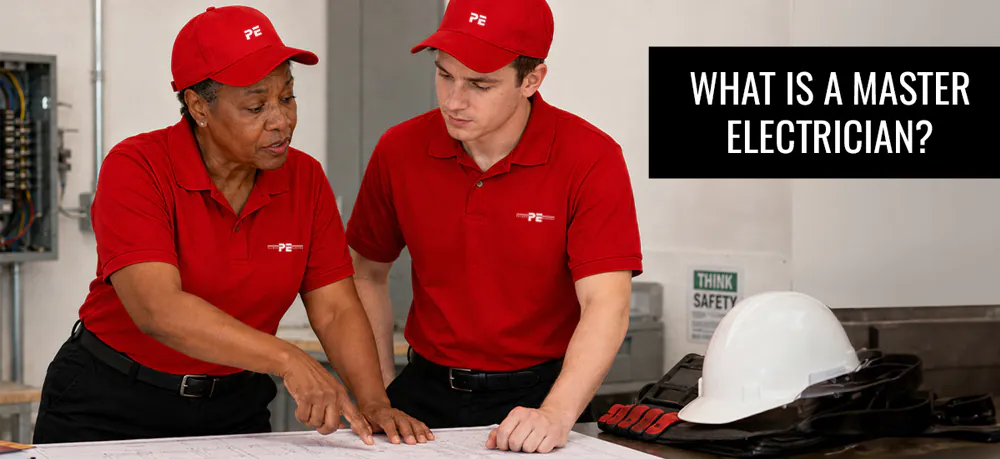
A master electrician is the highest level of electrician licensure in the United States. They are authorized to design electrical systems, pull permits, supervise journeymen and apprentices, and take full legal responsibility for electrical projects. Reaching this level typically requires 7 to 10 years of combined apprenticeship and journeyman experience, plus passing an advanced licensing exam.
If you have ever hired an electrical contractor and wondered who is actually in charge of the project, the answer is usually a master electrician. They are the person at the top of the electrical trade, the one who signs off on the work, holds the license, and makes sure everything is done safely and up to code.
Most people in the electrical trade spend years working as apprentices and journeymen before they even qualify to sit for the master exam. It is a long road, but it comes with a level of authority and responsibility that no other license in the trade can match.
Key Takeaways for Master Electrician
- A master electrician holds the highest level of electrical licensure available in the U.S.
- They can design electrical systems, pull permits, supervise crews, and operate their own contracting businesses.
- Reaching master level typically requires 7 to 10 years of experience, including time as an apprentice and a licensed journeyman.
- The master electrician exam is one of the most rigorous credential exams in the skilled trades.
- In most jurisdictions, an electrical contracting company must have a master electrician on record to legally operate.
- Licensing requirements, titles, and exam structures vary by state and local jurisdiction.
Master Electrician Overview
Here is the updated Master Electrician Overview Table:
| Category | Details |
|---|---|
| License Level | Highest in the electrical trade |
| License Structure | Varies by state: Master Electrician (individual credential), Electrical Contractor (business-level license), or Specialty Master (restricted scope such as residential, low voltage, signs, or fire alarm) |
| License Issued By | State licensing board or local licensing authority, varies by jurisdiction |
| Typical Experience Required | 7 to 10 years total, including apprenticeship and journeyman time |
| Journeyman Experience Required | 2 to 4 years as a licensed journeyman, depending on jurisdiction |
| Exam Type | Advanced, state or locally administered, NEC-based |
| National Portable Exam Option | NASCLA accredited exam, accepted by select participating states |
| Can Pull Permits | Yes |
| Can Design Electrical Systems | Yes |
| Can Supervise Journeymen and Apprentices | Yes |
| Can Own or Operate Electrical Contracting Business | Yes, in most jurisdictions |
What Is a Master Electrician
A master electrician is a fully licensed electrical professional who has reached the top tier of the trade. They have completed an apprenticeship, worked as a journeyman, passed an advanced exam, and earned the legal authority to design, install, and take responsibility for complex electrical systems. For a full overview of the different types of electricians in the trade, see: Types of Electricians
Think of it this way:
- An apprentice learns the trade.
- Journeyman handles the hands-on work.
- A master electrician leads the whole operation.
The master electrician is the one who plans the project, oversees the crew, makes sure the work meets code, and signs off when the job is complete.
At Palmer Electric, our master electricians serve as the electrician of record. This person is ultimately responsible for the safety and quality of the work, from the first wire pulled to the final inspection. This is a legal designation with real responsibility and accountability.
Master Electrician Synonyms and Title Variations
You might come across different titles depending on the state or employer, but they generally refer to the same credential level. Here are the most common variations:
| Title | Where It Is Used |
|---|---|
| Master Electrician | Most common title across the U.S. |
| Master Electrical Contractor | Used in some jurisdictions where the license ties directly to contracting authority |
| Electrical Contractor (Master Level) | Common in states where contractor licensing is the top credential |
| Licensed Electrical Contractor | Used in some local jurisdictions |
| Electrician of Record | Refers to the licensed individual legally responsible for a project |
One thing worth knowing: not every state uses the title “master electrician” officially. Some states structure their top-level license around the contractor designation rather than the master title. The authority is the same. The name just varies.
Master Electrician Job Description
A master electrician is the highest-level licensed professional in the electrical trade, responsible for designing electrical systems, pulling permits, supervising crews, and serving as the electrician of record on projects. They hold legal and technical accountability for the work, whether that means running a single job site or overseeing an entire contracting operation.
At the job site level, a master electrician plans and coordinates the work, reads and interprets blueprints, manages the crew, and makes sure every installation meets the National Electrical Code (NEC) and local code requirements. At the business level, they are often the license holder that allows the company to legally operate, pull permits, and take on projects.
In many jurisdictions, an electrical contracting company must have at least one master electrician on record. Without that credential, the company cannot legally perform electrical work, that makes the master electrician the foundation the whole business stands on.
What Does a Master Electrician Do
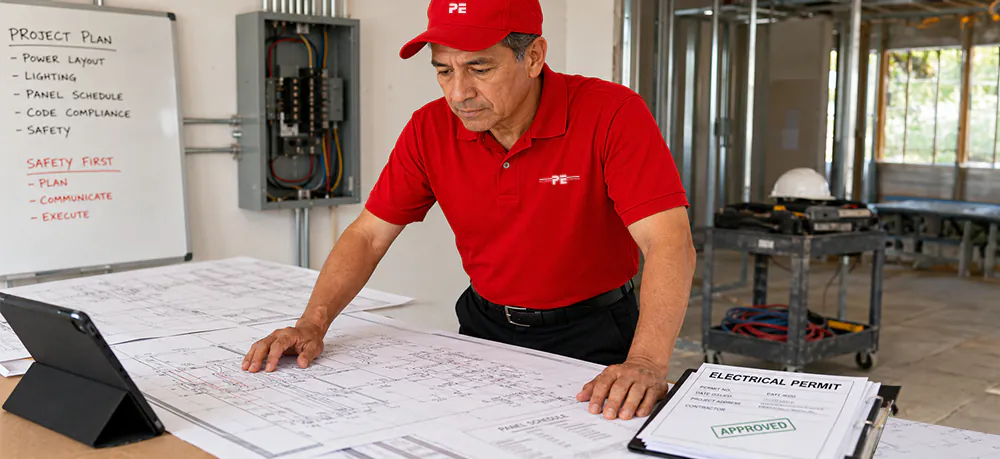
A master electrician designs electrical systems, pulls permits, supervises journeymen and apprentices, ensures code compliance, and serves as the electrician of record on projects. Their work goes beyond hands-on installation. It covers project leadership, technical troubleshooting, crew management, and in many cases, running the contracting business itself.
Master Electrician Duties and Responsibilities
Here is a breakdown of what master electricians are responsible for on a daily basis:
Design and Planning
Master electricians read and create electrical blueprints and schematics. They plan the layout of electrical systems for new construction and major renovations, making sure the design meets code before a single wire is pulled.
Permitting
In most jurisdictions, only a master electrician can apply for and pull electrical permits. This is one of the most significant distinctions between a master and a journeyman. Without a permit, work cannot be legally inspected or approved.
Supervision
Master electricians oversee journeymen and apprentices on the site. They assign work, make sure tasks are being done correctly, and step in when a problem needs to be handled right away.
Code Compliance
Every installation has to meet the NEC and any local amendments. The master electrician is the one responsible for making sure that happens, from the design phase all the way through final inspection.
Troubleshooting
When something goes wrong with a complex electrical system, the master electrician is usually the one called in to diagnose it. They often involve multi-system faults, load calculations, or aging infrastructure that requires experience to read correctly.
Training and Mentorship
Master electricians play a direct role in developing the next generation of electricians. They mentor apprentices, support journeymen, and help build the kind of real-world skill that keeps job sites safe and work quality high.
The Electrician of Record: What It Means and Why It Matters
You may hear the term “electrician of record” and wonder what it actually means. It is simpler than it sounds, but it carries real legal weight.
The electrician of record is the licensed master electrician who takes official responsibility for a project. Their license number goes on the permit application. Their name is attached to the work. If something is done incorrectly, or if an inspection fails, they are typically the one responsible for correcting the issue and answering to the authority having jurisdiction.
For homeowners and business owners, this matters a lot. When you hire a licensed electrical contractor, you are hiring the master electrician whose name and license are on the line for every decision made on your property.
At Palmer Electric, our master electricians take that responsibility seriously. Here in Central Florida, where code compliance is enforced strictly and inspections are thorough, having a qualified electrician of record is not optional. It is how the work gets done right the first time.
What a Master Electrician Can Do Overview
| Authority or Task | Master Electrician |
|---|---|
| Work Without Supervision | Yes |
| Pull Permits | Yes |
| Design Electrical Systems | Yes |
| Serve as Electrician of Record | Yes |
| Supervise Journeymen and Apprentices | Yes |
| Own or Operate an Electrical Contracting Business | Yes, in most states |
| Apply for Electrical Inspections | Yes |
| Train and Mentor Apprentices Officially | Yes |
Master Electrician vs Journeyman
Both are credentialed professionals, but they operate at different levels of authority and responsibility. If you want a full side-by-side breakdown of how the two credentials compare across experience, scope, supervision, and accountability, we cover that in detail in two places: What Is a Journeyman Electrician for the journeyman perspective, and Electrician Levels Explained for the full career ladder comparison.
Master Electrician Qualifications
Reaching master electrician status requires meeting a specific set of requirements that go well beyond what is needed for a journeyman license. The exact standards vary by state and local jurisdiction, but the core framework is consistent across most of the country.
Here is what most jurisdictions require:
- Age: At least 21 years old in many states, though some allow 18.
- Education: A high school diploma or GED, plus completion of an approved apprenticeship program or equivalent training.
- Journeyman Experience: Most states require 2 to 4 years of documented experience as a licensed journeyman electrician after completing the apprenticeship. For a full breakdown of the journeyman credential, see: What Is a Journeyman Electrician
- Total Hours: Combined apprenticeship and journeyman hours typically range from 8,000 to 12,000, and some states require up to 16,000.
- Exam: Passing a state or locally administered master electrician exam covering advanced NEC requirements, electrical theory, load calculations, and in some jurisdictions, business and law topics.
- Background Check: Required in many states as part of the licensing application
- Proof of Insurance: Some jurisdictions require liability insurance documentation at the time of application
Master Electrician Qualifications Overview
| Requirement | Typical Standard |
|---|---|
| Minimum Age | 21 in most states, 18 in some |
| Education | High school diploma or GED plus apprenticeship |
| Journeyman Experience | 2 to 4 years as a licensed journeyman |
| Total Experience Hours | 8,000 to 12,000 hours, up to 16,000 in some states |
| Exam Coverage | NEC, electrical theory, load calculations, local codes |
| Background Check | Required in most jurisdictions |
| Insurance | Required in some jurisdictions at application |
| License Issued By | State board or local licensing authority |
Master Electricians License
A master electrician license is the credential that makes it all official. It is what separates someone who is highly skilled from someone who is legally authorized to lead projects, pull permits, and operate a contracting business.
How Master Electrician Licenses Are Categorized
Because licensing is not nationally regulated, different jurisdictions classify this credential under slightly different types and scopes of practice:
- Master Electrician (Individual): Primarily functions as a supervisory credential. It proves you have mastered the National Electrical Code (NEC) and qualifies you to manage job sites, oversee apprentices, and pull permits.
- Electrical Contractor: In many states, this is the business-level license. It legally allows you to bid on jobs, hire employees, and offer services directly to the public. In some states, like Florida, the contractor license is the top-level credential rather than a separate master electrician title. The authority is equivalent; the structure is just different.
- Specialty Master Licenses: Certain states or cities issue restricted master licenses, limiting your work scope exclusively to areas like residential wiring, signs, fire alarm systems, or low-voltage systems.
What Is a Master Electrician License
A master electrician license is the highest level of electrical certification issued by a state or local licensing authority. It authorizes the holder to design electrical systems, apply for permits, supervise all levels of electricians, and serve as the electrician of record on any project within their licensed jurisdiction.
Candidates become licensed when they meet all experience requirements, pass the master exam, and submit an application to the state or local jurisdiction’s licensing board. Licensees must renew their license periodically, often every one to three years, depending on the state.
It is worth noting that a master electrician license is not the same in every state. Some states issue it directly as a “master electrician” credential. Others, structure their top-level license differently. Always verify the specific credential required in the state where you plan to work.
Florida Master Electrician License: Certified vs Registered
Florida is one of the states that does not use the title “master electrician” for its top-level credential. Instead, the Florida Department of Business and Professional Regulation (DBPR) issues two types of electrical contractor licenses at the highest level: Certified and Registered.
Here is how they differ:
Certified Electrical Contractor A Certified license is issued at the state level and is valid statewide. This means the license holder can pull permits and perform work anywhere in Florida without needing additional local approval. This is the license that offers the broadest scope of practice across the state.
Registered Electrical Contractor A Registered license is issued at the local level, tied to a specific county or municipality. It is valid only within that local jurisdiction. If a Registered contractor wants to work in a different county, they need to register their license with that county’s local authority before pulling permits there.
| License Type | Issued By | Valid In | Permit Authority |
|---|---|---|---|
| Certified Electrical Contractor | Florida DBPR (state level) | Statewide, all counties | Yes, statewide |
| Registered Electrical Contractor | Local jurisdiction | Specific county or municipality only | Yes, within that jurisdiction |
At Palmer Electric, our licenses cover the Central Florida area and are maintained in full compliance with Florida DBPR requirements. If you are hiring an electrical contractor in Florida, always ask whether they hold a Certified or Registered license, and confirm it covers the county where your project is located.
How Long Does It Take to Become a Master Electrician
Becoming a master electrician typically takes 7 to 10 years from the time you enter the trade. That includes your apprenticeship, your time as a licensed journeyman, and the process of applying for and passing the master exam.
Here is how the timeline generally breaks down:
Typical Timeline to Master Electrician by Stage
| Stage | Duration | What Happens |
|---|---|---|
| Apprenticeship | 4 to 5 years | About 8,000 hours of on-the-job training plus classroom instruction, results in journeyman license eligibility |
| Journeyman Experience | 2 to 4 years | Working independently as a licensed journeyman, accumulating required hours before qualifying for master exam |
| Master Exam Prep and Application | 3 to 6 months | Studying for the advanced exam, submitting application, background check, scheduling and sitting the exam |
| Total Typical Timeline | 7 to 10 years | From trade entry to master license in hand |
A few things can affect how long this takes. Some states require more total hours than others. Texas, for example, requires 12,000 total hours and at least 2 years as a licensed journeyman before sitting for the master exam. Other states have lower thresholds. In some cases, holding an electrical engineering degree or completing certain trade school programs may reduce the required field hours, but this varies significantly by jurisdiction.
If you enter the trade through a registered apprenticeship and work consistently toward the master credential, 7 years is a realistic target in many states. In others, plan for closer to 10.
How to Become a Master Electrician
Becoming a master electrician follows a clear path, but it takes years of commitment to get there. Here is how most electricians reach the top credential in the trade:
- Earn your high school diploma or GED. Math skills, especially algebra, are important. If you can take courses in physics or electronics, even better.
- Enter a registered apprenticeship program. Look for programs through the Electrical Training Alliance, Independent Electrical Contractors (IEC), Associated Builders and Contractors (ABC), or your local IBEW union hall. This is where your clock starts on the documented training hours you need.
- Complete your apprenticeship and earn your journeyman license. Most apprenticeships run four to five years. Once you finish and pass your journeyman exam, you are a licensed journeyman.
- Work as a journeyman and accumulate experience. Most states require two to four years as a licensed journeyman before you can qualify for the master exam. Use this time to gain experience across different project types, especially commercial and industrial work, which tends to prepare you better for the master exam.
- Study for and pass the master electrician exam. The exam covers advanced NEC calculations, complex load analysis, system design and (depending on your jurisdiction) business and contract law. Because of this, most candidates take an organized prep course.
- Submit your application and get licensed. Once you pass, apply through your state or local licensing board, complete any background check requirements, and get your license issued.
How Difficult Is It to Become a Master Electrician?
Becoming a master electrician is one of the most demanding paths in the skilled trades. It requires 7 to 10 years of combined apprenticeship and journeyman experience, a deep working knowledge of the National Electrical Code (NEC), and passing an advanced exam that covers load calculations, system design, and in many states, business and contract law.
Post exam there is also time involved. Expect to invest 7-10 years of on-the-job full time work, along with classroom training and regular performances before you become eligible to even take the test. Most people enroll in prep classes to study for the master exam, and even then, not everyone passes on the first attempt.
That said, the difficulty is part of what makes the credential meaningful. Every master electrician has earned it.
What Is the Fastest Way to Become a Master Electrician?
The honest answer is that there is no shortcut that skips the core requirements. However, there are ways to move through the process more efficiently:
- Start early and stay consistent. Going into an apprenticeship right out of high school and working full time with no breaks is by far the biggest contributor in reaching master status faster.
- Choose your state strategically. Hour requirements vary significantly. Some states require 8,000 total hours, others require 12,000 or more. If you have flexibility in where you work, this matters.
- Leverage trade school credit. Some states allow completed trade school or technical college programs to substitute for a portion of required field hours. Check your state’s rules before enrolling.
- Study the NEC from day one. Most master exam failures come down to NEC knowledge. Starting your code study early, not just when you are close to the exam, puts you in a much stronger position.
- Pursue commercial and industrial experience as a journeyman. This type of work exposes you to larger, more complex systems and prepares you better for the design and calculation portions of the master exam than residential work alone. For a full breakdown of the residential electrician role, see: What Is a Residential Electrician
Master Electrician Career
A master electrician license opens doors that no other credential in the trade can. It is the difference between performing electrical work and leading it at every level.
Is Master Electrician a Good Career?
Yes, and for most people who reach that level, it is one of the most rewarding decisions they made in the trade. A master electrician has earned the authority to run projects, lead crews, and in most states, operate their own electrical contracting business. That combination of technical expertise and professional authority is rare in any field.
The demand is real too. According to the U.S. Bureau of Labor Statistics, employment for electricians is projected to grow 9 percent from 2024 to 2034, which is much faster than the average for all occupations. Master electricians, as the credential holders that contracting businesses are built around, sit at the top of that demand curve.
Beyond job security, the master credential offers respect. In the trade, a master electrician has earned the trust of their crew, their clients, and their licensing authority.
What Homeowners and Business Owners Should Know About Master Electricians
If you are hiring an electrical contractor, there is a good chance a master electrician is the person whose license is on the permit. Here is what is worth knowing before you hire.
The licensed electrician, electrical contractor, or qualifying license holder listed on the permit is legally responsible for the work. When a permit is pulled in their name, they are accountable for every installation on that project. That accountability is your protection as a customer. It means someone with a real credential and a real license at stake is responsible for making sure the work is done correctly.
Ask if the company has a master electrician on record. A legitimate electrical contractor will always have a licensed master electrician attached to their operation. If a company cannot tell you who their master electrician is, or cannot produce a license number, that is a red flag.
Not all licenses cover all work types. Some master licenses are limited to residential work, while others cover commercial and industrial settings. If your project is commercial, confirm that the contractor’s master electrician holds the appropriate license for that scope of work. For a full breakdown of the commercial electrician role, see: What Is a Commercial Electrician
Licensed, bonded, and insured matters. The master license is the technical credential. But you also want to make sure the company is bonded and insured. That covers you if something goes wrong beyond the scope of the electrical work itself.
Looking for a licensed electrical contractor in Central Florida? See how Palmer Electric’s electrical contractors can help.
Master Electrician FAQs
How Many Years to Be a Master Electrician
Becoming a master electrician typically takes 7 to 10 years. That includes 4 to 5 years in a registered apprenticeship, 2 to 4 years working as a licensed journeyman, and the time needed to apply for and pass the master exam. Some states require more total hours than others, so the exact timeline depends on where you are working.
What Qualifies Someone as a Master Electrician
To qualify as a master electrician, a person must typically hold a high school diploma or GED, complete a registered apprenticeship, work 2 to 4 years as a licensed journeyman, accumulate between 8,000 and 12,000 total hours of experience depending on the state, and pass a rigorous master electrician exam. Some jurisdictions also require a background check and proof of insurance.
What's Better, Journeyman or Master Electrician
The answer depends on who is asking.
If you are a homeowner or business owner hiring an electrician: It depends on the type of work you need. For most standard electrical work, repairs, upgrades, fixture installations, and panel work, a journeyman electrician working under a licensed contractor is exactly what you need. If your project requires permits, new construction, or a full system design, a master electrician needs to be involved as the electrician of record. In either case, the contractor you hire should have a master electrician on record, because that is the person legally responsible for making sure the work is done correctly and up to code.
If you are considering a career in the electrical trade: It depends on your goals. A journeyman license is a complete, respected career on its own. Most field electricians work at the journeyman level their entire careers and do very well. If your goal is to lead projects, supervise crews, or own your own electrical contracting business, then master is the credential to work toward. It takes longer and requires more, but it opens doors that no other license in the trade can.
Does Florida Have a Master Electrician License
Florida does not use the title “master electrician” for its top-level credential. The Florida Department of Business and Professional Regulation (DBPR) issues two types of contractor licenses at the highest level: Certified Electrical Contractor, which is valid statewide, and Registered Electrical Contractor, which is valid within a specific local jurisdiction. These credentials carry the same authority as a master electrician license in other states.
Conclusion
A master electrician is the backbone of the electrical industry. They are the professionals who have logged thousands of hours in the field, studied some of the most complex code requirements in the skilled trades, and earned the legal authority to design, permit, and lead electrical work from the ground up.
At Palmer Electric, we have deep respect for what it takes to reach that level. Our master electricians bring decades of combined experience to every project we take on in Central Florida, and that expertise is what our clients have counted on since 1951.
Whether you are a homeowner trying to understand who is responsible for the work on your property, a business owner evaluating contractors, or someone considering the trade as a career, knowing what a master electrician is and what they do helps you make smarter decisions.
Looking for a Licensed Master Electrician or a Electrical Contractor in Central Florida?
At Palmer Electric, we have been serving Orlando and Central Florida since 1951. Every project we take on has a licensed master electrician as the electrician of record, which means proper permitting, code-compliant work, and someone with real credentials on the line for every job we do.
If you are looking for an electrical contractor you can trust, we are ready to help. Contact us today to schedule service or request a quote.
References
- U.S. Bureau of Labor Statistics, Occupational Outlook Handbook: Electricians: https://www.bls.gov/ooh/construction-and-extraction/electricians.htm
- NFPA 70, National Electrical Code (NEC), National Fire Protection Association: https://www.nfpa.org/codes-and-standards/7/0/70
- Florida Department of Business and Professional Regulation (DBPR), Electrical Contractor Licensing: https://www.myfloridalicense.com/DBPR/electrical-contractors/
- U.S. Department of Labor, Apprenticeship Finder: https://www.apprenticeship.gov
- Electrical Training Alliance (NECA/IBEW Joint Apprenticeship): https://www.electricaltrainingalliance.org
- Texas Department of Licensing and Regulation (TDLR), Electrician Licensing: https://www.tdlr.texas.gov/electricians
- OSHA Electrical Safety Standards, 29 CFR 1926 Subpart K: https://www.osha.gov/laws-regs/regulations/standardnumber/1926/1926SubpartK
- Electrician Licensing Requirements by State, SparkShift: https://sparkshift.app/electrician-licensing-requirements-by-state
- Electrician License Requirements by State, ContractorNerd: https://www.contractornerd.com/blog/electrician-license-requirements/