Holiday Light Safety Tips
Your Christmas light display is an amazing way to bring the joy of the holidays to your home and to share this special season with your neighbors. However, you should plan carefully to ensure your lighting display is safe for you and your family.
Every year, there are an average of 200 home fires in the U.S. caused by Christmas trees, with 44% of them due to Christmas lights. Sadly, Christmas tree fires cause fatalities more often than other types of fires, with the National Fire Protection Association reporting 6 civilian deaths, 16 civilian injuries, and $14.8 million in direct property damage each year.
Unfortunately, in Central Florida, we see electrical issues, overloaded outlets, and even fires that could have been avoided with a few simple precautions every December. At Palmer Electric, we want your home to look festive and stay safe.
So before you plug in those lights or set out the holiday décor, here are some practical holiday safety tips and instructions to set a Christmas light timer to keep your family safe, protect your home, and make your holiday light display safer.
1. Holiday Candles Safety
Christmas is actually the peak day for candle fires, and almost half of December’s home decoration fires start with candles. With all the holiday activity, it is easy to forget a candle or place it a little too close to something that can ignite. So please, remember that open flames can turn dangerous very quickly, especially with dry holiday décor that can catch fire quickly.
a. Use Battery Operated Flameless Candles
A simple way to stay safe is to switch to flameless candles. These look realistic, come in all styles, and take the worry out of the room. No flames, no heat, and no risk of knocking one over.
b. If You Do Use Lit Candles
If you love real candles, just follow a few easy safety steps:
- Use sturdy, stable candle holders.
- Place candles where they cannot be bumped or knocked over.
- Keep candles at least 12 inches from anything that can burn.
- Keep candles out of reach of children and pets.
- Never leave candles unattended, even for a moment.
- Avoid placing candles near windows where curtains or drafts can move into the flame.
- Set candles on heat-resistant surfaces.
- Always extinguish candles before going to bed.
- Keep candles away from holiday greenery like garlands and wreaths since they can dry out fast and ignite quickly.
At Palmer Electric, we have seen how fast a small flame can lead to a major problem, so using these precautions is one of the easiest ways to keep your holiday season safe and stress-free.
2. Holiday Lights Safety
Holiday lights look great, but choosing the wrong type can lead to overheating, tripped breakers, or even a fire. In humid states like Florida, sudden winter rainstorms make it even more important to pick lights that are safe for where you plan to use them. Before you install, make sure the lights you choose can handle your state’s weather.
| Safety Topic | What to Check | Safe Practice |
|---|---|---|
| Light Strands | Cracked bulbs, loose sockets, frayed wires | Replace damaged strands, never tape exposed wires |
| Extension Cords | Indoor vs outdoor rating, cord condition | Use outdoor rated cords outside, keep cords dry |
| Circuits | Tripped breakers, warm outlets | Spread load across multiple circuits, use LEDs |
| Outdoor Lighting | Weather exposure, open connections | Use GFCI outlets, weatherproof covers, elevate plugs |
| Timers | Overuse or continuous running | Use timers to avoid overheating and save energy |
a. Pick the Right Kind of Lights
Not all light strands are built the same. Indoor sets are lighter and not designed for moisture, and using them outside can cause shorts or shock hazards. Outdoor-rated lights are made with tougher insulation, sealed sockets, and better protection against Florida’s wet conditions.
LED lights are usually the safest choice. They stay cool, they use far less power, and they reduce the risk of overloaded circuits, especially when you are decorating large trees or long rooflines.
b. Choose Safety Rated Lights
Before you hang anything, check the tags and labels on your light sets. These ratings tell you exactly where your lights can be used safely.
- Look for a UL Listed or ETL Listed tag.
- A green UL tag means the lights are for indoor use only.
- A red UL tag means the lights are safe for both indoor and outdoor use.
- For outdoor setups, pick lights with an IP44 rating or higher so they can handle moisture and rain.
While you are checking the tags, give the bulbs and wiring a quick inspection. Replace any cracked bulbs, loose sockets, or damaged wires before plugging the strand in. Also, take a moment to read the manufacturer’s instructions since every set has its own limits for how many strands you can safely connect.
Using the right lights makes your display safer, longer lasting, and much more reliable throughout the holiday season.
| Problem | Likely Cause | Quick Fix |
|---|---|---|
| Lights flicker | Loose bulb or weak connection | Tighten or replace bulbs |
| Strand goes out | Blown fuse in plug | Replace plug fuse |
| Breaker trips | Too many lights on one circuit | Split display across circuits |
| Outdoor lights keep going out | Moisture in connections | Elevate plugs, use weatherproof covers |
| Half a strand not lighting | Broken wire or faulty section | Replace entire strand |
3. Holiday Electrical Safety
With all the lights, inflatables, and decorations plugged in at once, it is easy to push a circuit past its limits during the holidays. At Palmer Electric, we get more calls this time of year from homeowners dealing with tripped breakers or lights that keep going out. A few simple checks can keep your electrical system safe and running smoothly.
a. Don’t Overload Your Circuits
Calculate the load you will be adding to your circuit when you plan your lighting display. Most residential electrical circuits have a max capacity of 15 to 20 amps, and you should only ever place 80% of the max load on the circuit. First, estimate how many amps are already placed on the circuit. What area of your home does each circuit include? Take into consideration all of the appliances and lighting connected to that circuit. Then, find the watts required for each string of lights by looking at the tag on the cord. Generally, a 15-amp circuit can handle 1800 watts (15 amps x 120 volts).
Electrical failures or malfunctions are factors in one quarter of Christmas tree fires, according to the National Fire Protection Association. If you want to do a more extravagant Christmas light display, call a reputable local licensed electrician to assess the health of your wiring and the max capacity for your circuits. Property damage, injury and fatality caused by Christmas lightings are preventable. Do not let your holiday light display turn into a tragedy.
Holiday displays can draw more power than you realize, especially if you are still using older incandescent light strands. LED lights are a great way to reduce the load since they use far less energy and stay much cooler.
If you notice warm outlets, flickering lights, buzzing sounds, or breakers that keep tripping, your circuit is likely overloaded. The solution? Spread your decorations across multiple outlets or circuits. Don’t use only one outlet to pull all the power for everything. It is a small change that makes a big difference in safety.
b. Check Light Strands Before Use
Before you hang anything, take a minute to inspect each strand. Look for:
- loose bulbs
- damaged sockets
- insulation that looks worn
Even one small problem can turn into a shock or fire hazard once the lights heat up.
c. Replace Worn or Damaged Strings of Christmas Lights
Once you have checked that the load on your electrical circuits is correct, take time to go through your boxes of Christmas lights and make sure they’re in good condition. Any cords with damaged or worn casing will need to be replaced. Replace any strands of lights in which the bulb setting is coming loose from the cord. This can allow moisture to enter and cause a fire, or expose you and loved ones to a live wire.
If something looks questionable, replace it. Light sets are inexpensive compared to the risk.
- Replace cracked or broken bulbs
- Throw away strands with frayed or pinched wires
- Never tape over open wires
- Check for cuts or nicks in the insulation
At Palmer Electric, we always say “it’s better to be safe than sorry”. Holiday lighting should be fun, not stressful. A quick visual check before plugging anything in goes a long way toward keeping your home safe all season long.
4. Choose the Right Extension Cord for Your Christmas Lights
Extension cords work hard during the holidays, and using the wrong kind can create real hazards. Every December, we see many issues caused by indoor cords being used outside or cords carrying more load than they were designed for. A few quick checks can keep everything safe and running smoothly.
a. What to Look For in Extension Cords
Start with the rating. Outdoor displays should always use outdoor-rated extension cords because they are built to handle moisture and sudden weather changes. Also, check the amperage rating on the cord to make sure it can safely handle the lights or inflatables you are plugging in.
For outdoor setups, plug cords into a GFCI-protected outlet so the circuit will shut off instantly if moisture becomes a problem.
b. Check All Extension Cords
Before you plug anything in, inspect the entire length of the cord. Look for cracks, cuts, exposed wires, or plugs that feel loose. If something does not look right, replace the cord. Damaged cords are one of the most common causes of holiday electrical issues.
C. Keep the Cords Dry
Try to keep all plugs and connections off the ground where water can pool. Use cord protectors or elevate the plugs slightly so they are not sitting in damp grass or on wet concrete.
d. Prevent Tripping Hazards
Cords cause many preventable injuries during the holidays. When you need to run cords, do it along the walls or landscaping, not across walkways. If a cord has to cross a path, secure it and make it clearly visible so no one trips.
e. Do Not Leave Holiday Lights Up Year Round
Sun and humidity wear down cords quickly, sepcially if you are here in Florida. Leaving them up all year can cause cracking or brittleness that is not safe for next season.
f. Be Careful With Outlets
Avoid loading multiple high demand decorations into one outlet. Spread your lights and displays across different circuits when possible to prevent overheating.
g. Do Not Run Cords Through Windows or Doors
Closing a window or door on a cord pinches the insulation, and over time the wire can become exposed. This is a common but serious fire hazard.
h. Do Not Run Cords Under Rugs or Furniture
Cords need airflow to stay cool. When they are hidden under rugs or heavy furniture, they can overheat and melt the insulation.
i. Beware of Indoor Extension Cords Heating Up and Causing Fires
Indoor cords are lighter and not designed for long holiday use. If you feel any warmth on the cord, unplug it immediately.
We believe that a safe holiday setup starts with the right cords. Good extension cords protect your home, reduce electrical load, and make sure your holiday lights shine safely all season long.
5. Outdoor Christmas Lighting Safety
Outdoor lights face a lot more stress than indoor decorations. Between humidity, sudden rain showers, and occasional winter winds, your display needs to be set up with safety in mind.
a. Weatherproof Outdoor Light Connections
Before you hang anything:
- Test your lights to make sure every strand is working.
- Find a setup that keeps all electrical connections off the ground and away from areas where water tends to collect. Even small puddles can create shock hazards.
- Purchase plastic light clips or outdoor-rated mounting hardware.
- Do not use nails or staples. Metal fasteners can pierce the insulation and lead to shorts or exposed wiring.
b. Use Outdoor Rated Lights and Extension Cords
Outdoor rated lights and cords are built to handle moisture, UV exposure, and Florida’s temperature swings. Never mix indoor cords or indoor light sets into an outdoor display. They are not built for wet conditions and can fail quickly.
Secure cords so they do not sway into sharp edges, metal gutters, or moving decorations when the wind picks up.
c. Use Weather Resistant GFCI Outlets
Any outdoor lighting should always be plugged into a GFCI protected outlet. A GFCI device shuts the power off instantly if there is any sign of moisture or electrical imbalance, which helps prevent shock and equipment damage.
d. Weatherproof Outlet Covers or Cord Gaskets
Use outdoor rated in use covers or cord gaskets to keep outlets protected even when cords are plugged in. This keeps rain from entering the outlet box and helps your decorations stay powered safely through the season.
e. Portable GFCI Adapters
If your outdoor outlet is not GFCI protected, a portable GFCI adapter is a great solution. They offer:
- Prevent Electrical Shock: Cuts power instantly if there is a fault.
- Weather Resistance: Designed for damp or humid outdoor conditions.
- Overload Protection: Adds an extra layer of safety for larger displays or multiple light sets.
f. Turn Off and Unplug Lights Overnight or When Unattended
Lights left on for long periods can overheat, especially older incandescent strands. Disconnecting them reduces fire risks and helps your lights last longer.
g. Use a Christmas Lights Timer
Another way to prevent a Christmas fire is to use a timer for your Christmas lights. An automatic timer will help you ensure your lights are off while you are asleep and when you leave home. Also, keeping the lights on for shorter periods of time will help you prevent the lights from overheating. An added bonus is that it will save you money on your electric bill. See our previous articles to calculate your Christmas light bill cost and for more tips on saving money on electricity during the holidays.
| Do | Don’t |
|---|---|
| Use outdoor rated lights and cords | Use indoor cords outdoors |
| Plug into GFCI outlets | Leave plugs sitting in wet grass |
| Weatherproof all connections | Use nails or staples on wiring |
| Secure cords with plastic clips | Let cords hang loosely in the wind |
| Turn lights off when sleeping | Leave lights running nonstop |
6. Christmas Tree Safety
Christmas trees are a holiday favorite, but they can also become a major fire hazard if they are not cared for properly. One in five Christmas tree fires starts because a heat source was placed too close to the tree. So please, remember that a little planning goes a long way in keeping your home safe during the holidays.
Safety Tips for Fresh Trees
a. Choose a Fresh Tree
A fresh tree is much less likely to dry out quickly. Look for trees with bright green needles and strong branches.
b. How to Identify a Fresh Tree
Give a branch a gentle pull. If the needles stay in place and feel soft, the tree is fresh. If needles fall off easily or feel brittle, choose another one.
c. Keep Your Christmas Tree Watered to Prevent Fire
A well watered tree stays cooler and is far less likely to ignite. Check the water level every day, since fresh trees can absorb a surprising amount of water, especially in Florida homes where indoor air can be dry from heating systems.
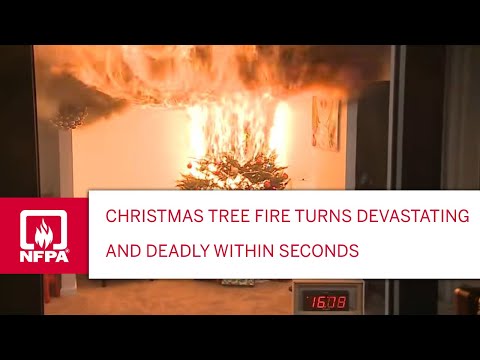
This video by the National Fire Protection Association demonstrates the importance of keeping your Christmas tree watered. A dry Christmas tree catches fire much more quickly than a well watered tree. The majority of Christmas tree related fatalities began in the living room with a fire started by Christmas lights, an electrical malfunction, or a candle.
c. Dispose of Your Tree Once It Is Dry
Once a fresh tree dries out, it becomes highly flammable. Do not leave it inside or in the garage. Take it to a recycling or disposal site as soon as the season is over.
Safety Tips for Artificial Trees
a. Choose a Fire Retardant Tree
If you prefer an artificial tree, check the label for fire retardant materials. This gives you an added layer of safety, especially when using lights or placing the tree near electrical outlets.
Safety Tips for All Trees
a. Keep Trees at Least 3 Feet From Heat Sources
This includes fireplaces, radiators, candles, space heaters, and heat vents. Florida HVAC vents can dry out trees quickly, so keep your tree well away from airflow.
b. Do Not Block Exits
Make sure your tree does not block hallways or doorways. You should always have a clear path in case of an emergency.
c. Use Safe Electrical Practices Around the Tree
Before hanging lights, inspect every strand for loose bulbs, cracks, or damaged wiring. Use LED lights since they stay cooler and reduce fire risk. Avoid overloading power strips behind the tree, and keep cords tucked safely where they will not be pulled or tripped over.
d. Turn Off Tree Lights When Unattended
It is important that you always turn off tree lights before going to bed or leaving the house. We understand that the lights are magical, but leaving them off is one of the simplest and most effective ways to prevent a small issue with a tree or a light strand from starting fires.
7. Safety Tips When Decorating With Christmas Lights
Decorating with lights is one of the best parts of the holidays, but it is also a time when electrical issues and fire hazards increase. A few simple steps can make your decorations safer and help everything last longer. So double-check your setup before flipping the switch.
a. Use Nonflammable or Flame Retardant Decorations
Holiday décor should always be made from materials that resist catching fire. This is especially important if it will sit near lights, outlets, or warm surfaces.
b. Keep Decorations Away From Heat Vents
Heat vents can dry out greenery, melt certain plastics, and even overheat light strands. Make sure decorations are placed well away from vents, fireplaces, candles, or any heat source.
c. Never Use Metal Staples, Tacks or Nails
Metal fasteners can pierce the insulation on your light cords and create shock or fire hazards. This is one of the most common mistakes we see during the holidays.
d. Use Plastic Hooks
Plastic hooks are safe, affordable, and easy to use. They hold lights securely without damaging the wiring.
e. Magnetic Light Clips for Metal Surfaces
If you are decorating gutters, metal columns, or other smooth metal surfaces, magnetic clips are a great option. They create a strong hold without scratching or puncturing anything.
f. Cordless Light Hangers With Poles
These tools help you hang lights in hard to reach places without leaning dangerously from ladders. They also reduce the risk of damaging cords.
g. Bring Outdoor Lights Inside After the Holidays
Outdoor lights and cords wear down quickly in Florida’s sun, humidity, and rain. Bring them inside once the season is over so they last longer and stay safer for next year.
Additional Quick Tips for Safer Decorating
- Inspect all light strands before hanging them
- Keep lights away from flammable décor like drapes or dry greenery
- Secure cords so they do not sag or become tripping hazards
- Avoid overloading outlets behind trees or displays
Following these simple steps keeps your home safe and lets your lights shine bright all season long.
8. Ladder Safety When Hanging Holiday Lights and Decorations
Ladders are the number one cause of holiday decorating injuries. In fact, they account for about 40 percent of the 14,800 decorating related injuries reported each year. Most of these accidents happen when folks are rushing, stretching too far, or using the wrong ladder for the job. Here are a few things to consider before climbing.
a. Use the Right Ladder
Choose a ladder that is tall enough so you never have to stand on the top step or lean off to the side. Overstretching is one of the biggest causes of falls. If you are decorating the roofline, an extension ladder is usually the safest choice.
b. Keep Three Points of Contact
Always keep two hands and one foot or two feet and one hand on the ladder at all times. This gives you better balance and reduces the odds of slipping.
c. Inspect the Ladder
Before climbing, check for loose steps, bent rails, broken locks, or anything that looks unstable. Even a small defect can make the ladder unsafe.
d. Position the Ladder on Stable, Level Ground
Make sure the feet are firmly planted and the ladder is not wobbling. Avoid placing it on soft soil, uneven pavers, or slippery surfaces. If the ground is not stable, reposition the ladder until it is safe.
e. Avoid Carrying Heavy Items
Climbing while holding lights, tools, or decorations can throw off your balance. Use a tool belt, a bucket attached to the ladder, or have a helper hand items up as needed.
f. Have a Spotter
Whenever possible, have someone hold the base of the ladder and keep an eye on you as you climb. A spotter adds stability and can quickly respond if something shifts.
g. Use Wireless Ladder Safety Monitors
These devices alert you if the ladder begins to shift or lean. They are helpful when you are working alone or hanging lights in higher, harder to reach places.
h. Wear Proper Footwear
Shoes with good traction help prevent slipping on ladder rungs. Avoid sandals, flip flops, and smooth soled shoes.
i. Stay Clear of Electrical Lines
If you are working near your roofline, always look for overhead power lines before you start. Maintain a safe distance and never let the ladder or light strands come close to electrical lines.
j. Avoid Using Ladders in Poor Weather
Winter winds and rain showers can make ladder work risky. If the ground is wet or the wind is picking up, wait for better conditions before climbing.
Taking a few extra minutes to set up safely keeps you off the injury list and helps your decorating project go a whole lot smoother.
Common Questions About Christmas Light Safety
Yes, unfortunately Christmas lights can cause fires and lead to fatalities at a higher rate than other fires. That is why it is important to follow instructions that come on your Christmas lights and avoid overloading your electrical circuits. The National Fire Protection Association reports that 40% of Christmas tree fires were caused by Christmas lights, and Christmas lights cause additional fires in other areas in and around the home. Between 2011 and 2015, one out of every 32 reported home Christmas tree fires caused a fatality, compared to an average of one death per 143 reported home fires.
Christmas lights are safe if the electrical wiring and electrical panel in your home are working properly, lights are used according to instructions, electrical circuits are not overloaded, and you follow holiday light safety best practices. It is important to keep your Christmas tree well watered to slow the progression of a fire in the case that your Christmas tree catches on fire.
Yes, it is safe to use outdoor Christmas lights indoors, as long as the voltage required is safe for your electrical circuits. However, you should never use indoor Christmas lights outside your home. They are not designed for exposure to moisture and could start a fire outside the home.
Outdoor Christmas lights that are rated water resistant or waterproof are safe in light rain. If there is water pooled on the ground and your lights are touching it, this is a hazard regardless of the type of lights. Always protect the electrical outlets from rain, and do not touch cords of Christmas lights that are submerged in water.
You should avoid leaving string lights on all night, as they are not designed for continuous use. Overheating of Christmas lights can be a fire hazard.
If your outdoor Christmas lights are continually going out, it could mean that your electrical circuit is overloaded. Call a licensed electrical to help you troubleshoot the source of the problem and correct it, since it could be a safety issue that could cause a fire or electrical emergency. If only some of the lights go it, you likely have a missing or broken bulb on your string of lights.
Connecting multiple strands of lights is common during the holidays, but there is always a limit to how many you can safely plug into one another. Exceeding that limit can cause overheating, blown fuses, dim lights, or even a tripped breaker. At Palmer Electric, we see this issue every season, especially with older incandescent strands.
a. Follow Manufacturer Instructions
Every light set is designed with a specific maximum number of strands that can be safely connected end to end. Always check the packaging or the tag on the cord, since different brands and bulb types vary.
As a general guide:
- Incandescent lights: usually safe for 3 to 5 strands connected together
- LED lights: often safe for 15 to 50 strands, depending on the brand and wattage
LEDs use far less power, which is why you can connect more of them without overloading the circuit.
Most light strands also have small built in fuses inside the plug. If you exceed the safe limit, these fuses will blow to protect the wiring. If your lights suddenly go out, this is often the reason.
b. Never Mix Bulb Types
Do not mix incandescent and LED strands in the same chain. They draw different amounts of power and are not designed to operate together. Mixing types can ruin the bulbs, blow fuses, or cause overheating.
c. Choose Matching Brands and Series
It is safer to stick to the same brand and product line when connecting multiple strands. Why? Different manufacturers use different electrical loads and connection styles. If you mix them can cause uneven brightness or early failure.
d. Be Mindful of Distance and Extension Cord Limits
The longer the total run, the more resistance you create in the wiring. This can dim your lights or put stress on the first strand in the chain. If you are decorating a larger area, split the load across two outlets or circuits instead of running everything in one line.
| Light Type | Typical Strand Length | Max Strands You Can Safely Connect | Notes |
|---|---|---|---|
| Incandescent Mini Lights | 50 to 100 bulbs | 3 to 5 strands | Highest heat output, higher wattage, easiest to overload |
| Incandescent C7/C9 Bulbs | 25 bulbs | 1 to 2 strands | Large bulbs draw more power, often have very low connection limits |
| LED Mini Lights | 50 to 100 bulbs | 15 to 50 strands | Very low wattage, cooler operation, safest option for long runs |
| LED C7/C9 Bulbs | 25 bulbs | 10 to 20 strands | Designed for longer connections, ideal for rooflines and large displays |
| Commercial Grade LED Strings | Varies | Up to 50+ strands (check manufacturer) | Built for large displays, safest for high count installations |
| Icicle Lights (Incandescent) | Varies | 2 to 3 strands | Incandescent icicles pull more power than people expect |
| Icicle Lights (LED) | Varies | 10 to 15 strands | Lower power draw allows more strands safely |
Important Reminders:
- Always check the manufacturer’s tag or packaging for exact limits.
- Never mix LED and incandescent strands in the same chain.
- If a plug, connector, or cord feels warm, reduce the number of connected strands.
- Outdoor displays often require shorter runs due to moisture and temperature exposure.
At Palmer Electric, we always recommend choosing LED lights whenever possible. They stay cooler, use far less power, and allow for safer, longer connections during your holiday setup.
Christmas Light Timer
Benefits of Using a Christmas Light Timer
Using a Christmas light timer offers multiple benefits for both safety and convenience. By automating the on and off times of your holiday lights, you reduce the risk of leaving them on for too long, which can prevent overheating and potential fires. Additionally, timers can help save on energy costs by ensuring that lights are only on when needed.
Choosing the Right Electric Timer for Your Lights
When selecting an electric timer for your Christmas lights, it’s important to consider the timer’s capacity and features. Look for timers that can handle the wattage of your light display and offer programmable settings. A light timer outdoor should be weather-resistant to withstand the elements and ensure reliable performance throughout the holiday season.
Setting Up Your Outdoor Christmas Light Timer
Proper setup of your outdoor Christmas light timer is crucial for both safety and efficiency. Ensure that the timer is rated for outdoor use and follow the manufacturer’s instructions for installation. Position the timer in a location that is protected from direct exposure to rain and snow to prolong its lifespan and maintain functionality.
Why Electrical Timers Are Essential for Holiday Safety
Electrical timers are an essential tool for maintaining holiday safety. They help prevent lights from overheating by limiting the time they are on. This is especially important for older light sets that may not have built-in safety features. By using an electrical timer, you can enjoy your festive display with peace of mind knowing that safety is prioritized.
Outdoor Timers for Lights: A Year-Round Solution
Outdoor timers for lights are not just useful during the holiday season. They can be utilized year-round to enhance home security and convenience. For instance, using timers to control outdoor lights can give the impression that someone is home, deterring potential intruders. They can also automate landscape lighting, making your outdoor spaces more inviting and safer to navigate at night.
Smart Electrician Timer Instructions
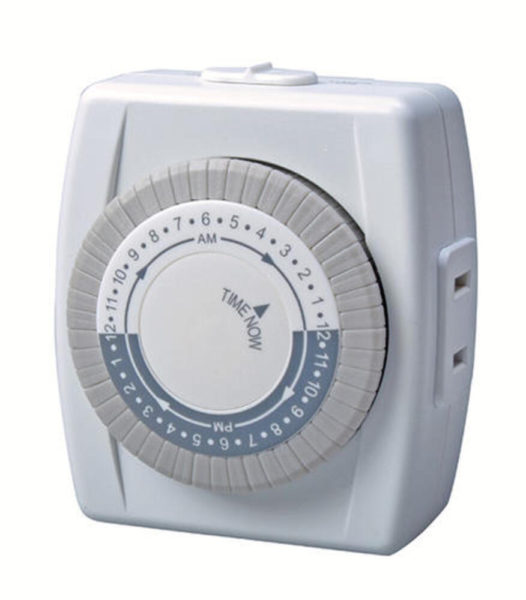
Using Christmas light timers both indoors and outdoors is a great way to make your holiday safer and cut energy costs. You can pick up a Smart Electrician Timer or another light timer for as little as $10. They are user friendly, and you can make use of them year round. After the holidays, you can use a light timer to give the illusion that you are home while on vacation by keeping your lights on a schedule. Keeping a light on a timer can also make it safer to enter your home at night without wasting money by keeping the lights on all day. See below for instructions to set your Christmas light timer.
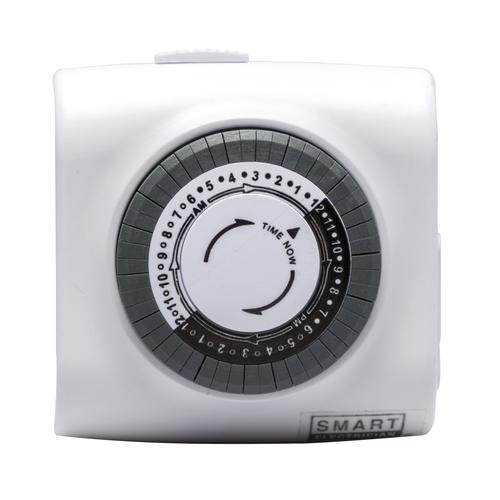
To set a Smart Electrician Timer:
- First, position the “Time Now” arrow on the timer to the current time.
- Next, select the time you want the lights to go on. For example, 6 P.M. Press down the 6 P.M. button on the front of the timer.
- Next, decide what time you want the lights to shut off. Then press down all the buttons in between those times. For example, press down all buttons between 6 P.M. and 11 P.M.
The buttons are very easy to press down and will continue to work on a daily basis until you change them.
Christmas light timers are safe to use. While any electrical device can malfunction, most Christmas light fires are caused by damaged Christmas lights or overloaded circuits.
Yes, you can put outdoor lights on a timer. Make sure you get a water resistant, weather resistant timer.
Yes, we recommend putting your Christmas tree lights on a timer to prevent overheating or accidentally leaving them on.
It is recommended to turn your Christmas lights off at night so that the lights do not overheat, creating a potential fire hazard.
Troubleshooting Common Electrical Timer Issues
If you encounter problems with your light timer outdoors, here are some common issues and solutions:
- Timer Not Turning On/Off: Ensure the timer is correctly set and the outlet is working.
- Lights Flickering: Check the connection and make sure the timer is compatible with the wattage of your lights.
- Timer Malfunctioning in Rain: Ensure the timer is weather-resistant and properly protected from the elements.
Conclusion
Holiday lighting and decorations bring a lot of joy, but they also bring extra safety considerations that many homeowners do not think about until something goes wrong. A little planning, the right equipment, and a few simple habits can make your home brighter and safer all season long. At Palmer Electric, we have been helping Central Florida families stay safe since 1951, and we know that most holiday electrical issues are completely preventable.
Choose the right lights, inspect your cords, use timers, keep your tree well cared for, and never rush when climbing ladders or hanging decorations. These small steps protect your home and your family, and they help your holiday display last longer, too.
24 Hour Electrician
If you want to ensure that your electrical wiring and electrical panel are ready for a holiday light display, the professionals at Palmer Electric can help. The licensed electricians at Palmer Electric have been providing electrical safety services for over 65 years. We also provide outdoor lighting installation services. It is much better to prevent an electrical emergency at your home or office than to wait until a crisis to call for professional assistance. Visit our contact page or call us at 407-646-8700 for a free quote