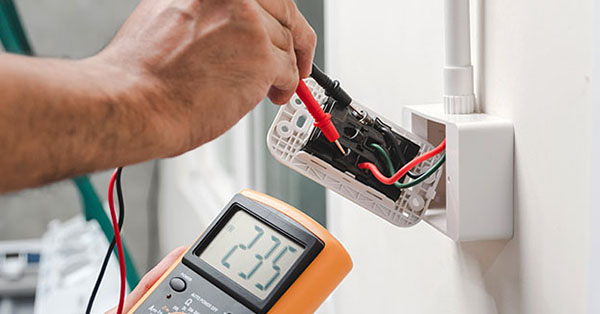
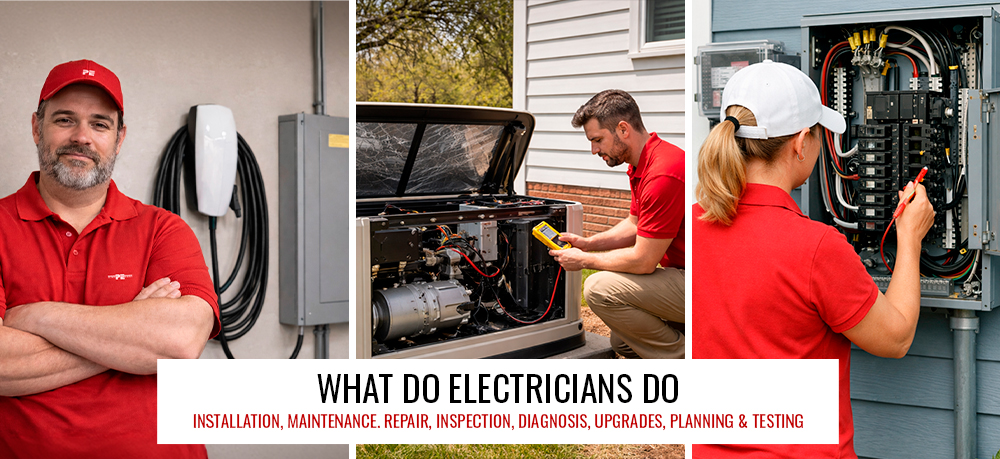
Electricians install, maintain, repair, and upgrade electrical systems that power homes, businesses, and industrial facilities. Their work ensures electricity flows safely, efficiently, and reliably through wiring, panels, circuits, and connected equipment.
Electricians do much more than “fix wiring.” They manage complete electrical systems, solve complex problems, and ensure buildings function the way they are designed to.
At Palmer Electric, we believe understanding the role of an electrician helps homeowners and business owners know when professional electrical expertise is needed and why it matters.
Key Takeaways
- Electricians install electrical systems in new and existing buildings
- They maintain and repair electrical systems to keep them functioning properly
- They inspect and diagnose electrical problems before they become serious
- They upgrade systems to meet modern power demands
- Their work combines hands-on skill, system knowledge, and problem-solving
For an in depth look of specific duties and accountability, see our full guide on electrician tasks and responsibilities.
What Do Electricians Do
Electricians can inspect, diagnose, install, maintain, repair, and upgrade electrical systems in commercial, industrial, and residential settings. Their work supports lighting, power distribution, equipment operation, and modern technology integration.
Their work can be grouped into several core functional categories. The table below summarizes the core functions electricians perform across residential, commercial, and industrial settings.
| Core Function | What It Means at a High Level |
|---|---|
| Installation | Setting up electrical systems in new or renovated structures |
| Maintenance | Keeping electrical systems operating safely and efficiently |
| Repair | Fixing system failures or malfunctioning components |
| Inspection | Evaluating system condition and identifying potential issues |
| Diagnosis | Identifying root causes of electrical problems |
| Upgrades | Improving system capacity, safety, or technology integration |
| Planning | Interpreting layouts and coordinating system design |
| Testing | Verifying systems operate as intended before completion |
Electricians may specialize in different environments, such as residential, commercial, or industrial settings. To understand how work varies across environments, read about the types of electricians and how each specialty functions.
What Does an Electrician Do?
An electrician installs, maintains, repairs, and improves electrical systems that power buildings and equipment. Their work ensures electricity is delivered safely, efficiently, and reliably across residential, commercial, and industrial environments.
Electricians do not just “work with wires.” They manage complete electrical systems that support lighting, power distribution, equipment operation, and modern technology.
Install Electrical Systems
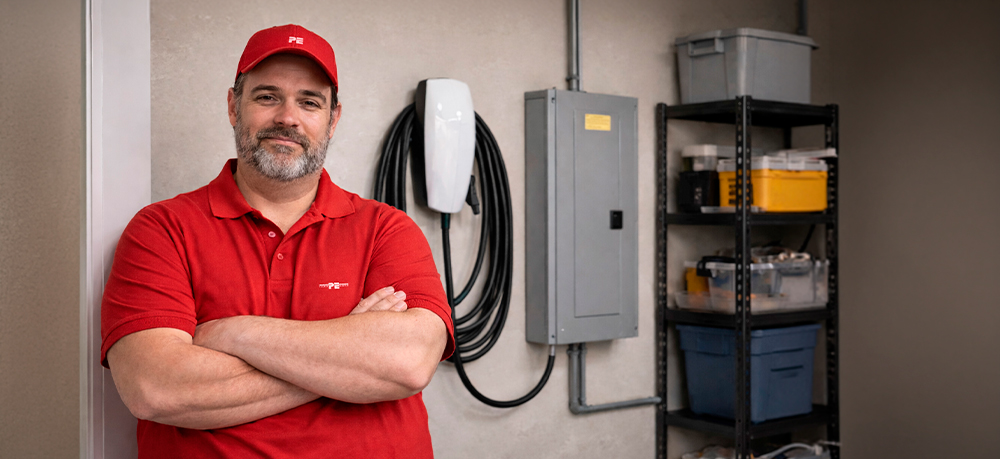
Electricians install electrical systems in new construction and renovation projects. This includes setting up power distribution so a building can function the way it was designed.
Installation work supports:
- Lighting systems
- Power outlets and circuits
- Service panels
- Equipment connections
Whether working in a home, office building, or manufacturing facility, electricians ensure electrical systems are properly positioned and integrated into the overall structure. Installation is not just about placing components. It requires understanding how electricity will flow throughout the space and planning for current and future power needs.
For example, when a building is constructed or renovated, an electrician must determine how power will be distributed across rooms, how circuits will be balanced, and how equipment will be safely connected. Proper installation helps prevent overloads, reduces future maintenance issues, and ensures the electrical system performs reliably over time.
If you’re interested in how installation tasks vary by environment, see our breakdown of the types of electricians, including residential, commercial, and industrial specialties.
Maintain and Repair Electrical Systems
Electricians maintain and repair electrical systems to keep them operating safely and efficiently. Over time, electrical components wear out, connections loosen, and systems experience stress from increasing demand.
Maintenance focuses on preventing unexpected failures before they occur. Repair work addresses problems when systems stop functioning properly or show signs of instability.
Let’s say a building begins experiencing flickering lights, intermittent power loss, or circuits that trip more frequently than usual. An electrician evaluates the system to determine whether the issue stems from aging components, overloaded circuits, or faulty connections. Regular maintenance helps extend system life and reduce the likelihood of sudden disruptions.
For a more detailed look at specific maintenance duties, visit our guide on electrician tasks and responsibilities, where we explain daily work activities in depth.
Inspect Electrical Systems
Electricians inspect electrical systems to evaluate condition and performance. Inspections may occur during construction, after renovations, or when troubleshooting suspected problems.
These evaluations help identify:
- Early signs of system strain
- Improper installations
- Potential safety concerns
In many cases, after a home renovation, an electrician may inspect newly installed circuits to confirm they are properly connected, correctly balanced, and capable of handling expected loads. During an inspection, the electrician might identify loose connections, overloaded breakers, or wiring that does not align with the intended layout. Catching these issues early helps prevent larger system failures later.
Inspection work ensures electrical systems continue to operate as intended and meet expected performance standards.
Diagnose Electrical Problems
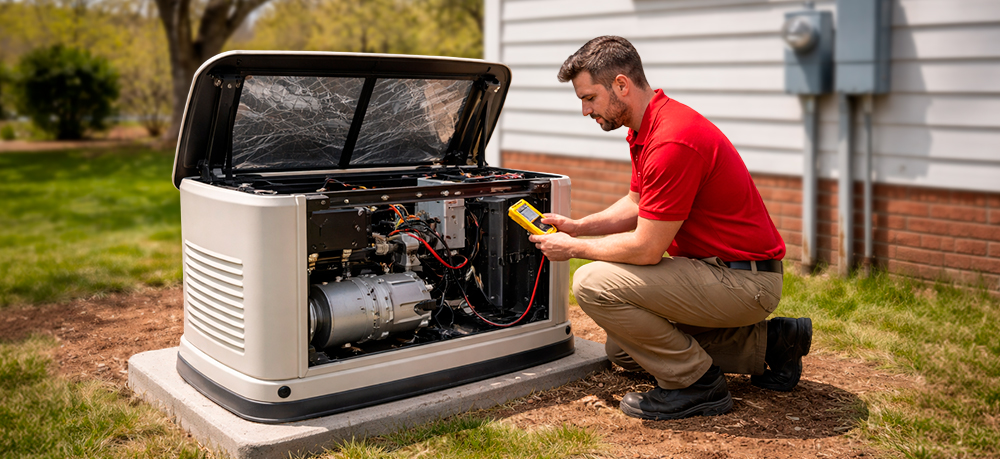
Electricians diagnose electrical problems by identifying the root cause of system malfunctions. Electrical issues are often not obvious, requiring logical problem-solving and an understanding of how systems interact.
Diagnosis may involve:
- Tracing system behavior
- Isolating circuit issues
- Determining whether failures stem from components, connections, or load demands
In real-world situations, problems are not always straightforward. After a major storm, for example, a homeowner may lose power. An experienced electrician evaluates whether the issue is related to a surge event, water intrusion, or damage to service equipment. Environmental factors such as heavy rain, high humidity, and lightning can all affect system performance.
This diagnostic process is one of the most important aspects of what electricians do. It requires both technical knowledge and structured reasoning to restore safe, reliable operation.
Upgrade and Improve Electrical Systems
Electricians upgrade electrical systems to meet modern power demands and technological advancements. As buildings add equipment, appliances, or new technology, existing systems may need improvements.
Upgrades may involve:
- Increasing system capacity
- Improving reliability
- Enhancing energy efficiency
- Supporting new installations such as EV charging or backup power systems
As technology advances and electrical demand increases, upgrade work becomes a critical part of an electrician’s role.
Plan and Interpret Electrical Layouts
Electricians plan and interpret electrical layouts to ensure systems are installed safely and efficiently. Before installation begins, they review technical drawings and coordinate how electrical systems will function within a building’s design.
Planning includes:
- Understanding system flow
- Mapping circuit placement
- Coordinating with construction teams
- Ensuring proper power distribution
In a typical scenario, during the construction of a new office building, an electrician reviews the layout to determine how power will be distributed across workstations, conference rooms, and shared equipment areas. They evaluate where panels should be located, how circuits should be balanced, and how future expansion might affect electrical demand. Proper planning at this stage prevents overloaded circuits, inefficient routing, and costly modifications later.
This planning stage ensures that electrical systems are not only functional but also logically organized and scalable for future needs.
Test and Verify Electrical Systems Performance
Electricians test and verify system performance to confirm that electrical systems operate correctly before completion. Testing ensures that circuits function properly and that systems deliver power safely and reliably.
In practice, after completing the electrical installation in a newly built home, an electrician tests circuits to confirm that lighting, outlets, and major appliances operate without interruption. They may evaluate how the system performs when multiple devices are running simultaneously to ensure circuits remain stable and balanced. This final verification step confirms that the system can handle real-world use.
Testing is a critical final stage that helps prevent future failures and supports long-term system reliability.
If you’re new to the trade and want a broader overview of the profession itself, you may also want to read our guide on what is an electrician, which explains the role and purpose of electricians at a foundational level.
What Electricians Do Not Do
Electricians manage electrical systems, but their role has defined boundaries. Understanding what electricians do not do helps clarify the profession and prevent confusion.
Electricians generally do not:
- Operate as utility line workers unless specially trained
- Design complex electrical engineering systems
- Repair household appliances as appliance technicians
- Perform unrelated handyman services
Their work focuses on electrical systems within structures, not utility grid operation or general repair trades.
Pros and Cons of What Electricians Do
Like any profession, the work electricians do comes with both rewards and challenges. Understanding both sides helps paint a realistic picture of what the role involves on a day-to-day basis.
Pros
Meaningful, essential work
Electricians support systems that people rely on every day. When electrical systems work properly, homes feel comfortable and businesses can operate without interruption. Knowing your work directly supports daily life can be very rewarding.
Variety of environments
Electricians often work in different settings, which helps keep the work from feeling repetitive. Each space brings unique electrical needs and challenges, making the role more engaging and dynamic.
Problem-solving focused role
Electricians regularly analyze situations, identify issues, and determine the best way forward. This problem-solving aspect appeals to people who enjoy thinking through challenges rather than doing the same task repeatedly.
Cons
Can be physically demanding
The work can involve movement, lifting, and working in a variety of positions. Physical effort is often part of the job, especially in active or fast-paced environments.
Requires constant attention and focus
Electrical systems require careful handling and close attention. Electricians must stay focused to ensure systems function properly and issues are addressed safely and correctly.
Work may involve urgent situations
Some electrical issues need immediate attention. This can add pressure when problems arise unexpectedly and solutions are needed quickly.
Some situations can involve higher risk if not handled correctly
Electricians work with powerful systems and high voltage. Careful evaluation and decision-making are essential to ensure safety and avoid complications.
The role often involves problem-solving under pressure
When systems are not working as expected, electricians are often called on to assess the situation and find answers efficiently.
Summary: Pros and Cons of What Electricians Do
The table below highlights the practical realities of working as an electrician.
| Pros | Cons |
|---|---|
Essential, high-demand profession | Can be physically demanding |
Problem-solving focused work | Requires constant attention and precision |
Variety of work environments | Work may involve urgent situations |
Clear career progression opportunities | Some situations involve higher risk if not handled properly |
Opportunity to specialize | Problem-solving under pressure |
Electricians work in environments that require focus and responsibility. If you’re considering this as a career, understanding the structure of the profession in our electrician levels guide can provide helpful context.
What Do Electricians Do? FAQs
Electricians can work in new construction, renovations, maintenance contracts, system upgrades, troubleshooting projects, and specialty installations. Career paths may include residential service work, commercial projects, industrial facilities, or supervisory roles.
To explore how electricians specialize, review our guide to the types of electricians and how each work environment differs.
Electricians perform technical, hands-on work focused on electrical systems. This includes system installation, performance testing, diagnostics, repairs, and upgrades to meet modern power demands.
If you’re looking for a foundational explanation of the profession itself, our article on what is an electrician explains the broader purpose and responsibilities of the role.
No, electricians do far more than just wiring. While wiring is part of installation and repair, electricians manage complete electrical systems, including panels, distribution, diagnostics, testing, and system upgrades.
Their role involves understanding how electrical systems function as a whole, not just individual components.
Conclusion
Electricians are essential to our communities. They install and maintain the electrical systems that power daily life, ensuring homes, businesses, and facilities operate safely and efficiently across residential, commercial, and industrial environments.
Far beyond simply working with wires, electricians manage complex electrical systems from initial planning through final performance verification. As technology advances and power demands increase, their role continues to grow in importance, supporting how modern buildings function every day.
Serving Central Florida since 1951, Palmer Electric has witnessed firsthand how electrical systems evolve with changing technology and severe weather challenges. Our focus remains the same: delivering safe, reliable electrical work performed by trained professionals committed to serving and protecting the Central Florida community.